Does Freezing Yogurt Kill The Cultures

Ever thrown a tub of yogurt into the freezer and thought, "Am I about to commit a tiny dairy crime?" You are not alone. The good news is that this question — does freezing yog...

Ever thrown a tub of yogurt into the freezer and thought, "Am I about to commit a tiny dairy crime?" You are not alone. The good news is that this question — does freezing yogurt kill the cultures — is way more fascinating (and less scary) than you might expect.
Whether you are a health nut, a curious snacker, or someone who simply loves a frozen treat on a Tuesday, stick around. This is going to make yogurt a lot more fun for you.
First, What Are These "Cultures" You Keep Hearing About?
Yogurt cultures are live bacteria — yes, bacteria that actually help you. Think Lactobacillus and Streptococcus thermophilus; they are the tiny workers behind that tangy, creamy magic.
Must Read
These probiotic buddies are the reason yogurt is considered good for your gut. They break down lactose, produce beneficial compounds, and generally keep your digestive system humming along.
But here is the million-dollar question everyone is really asking: what happens to these hardworking little guys when temperatures plummet?
So, Does Freezing Yogurt Kill the Cultures?
The short answer? Not really — at least, not in the way you might think. Freezing yogurt does not typically "kill" the probiotic cultures outright; instead, it puts them into a state of suspended animation.
When temperatures drop, bacterial cells slow down or go dormant. They are not dead; they are just taking a long, icy nap, waiting for conditions to warm back up.
Think of it like hitting pause on a video game. The characters are still there — they just are not moving for a while.
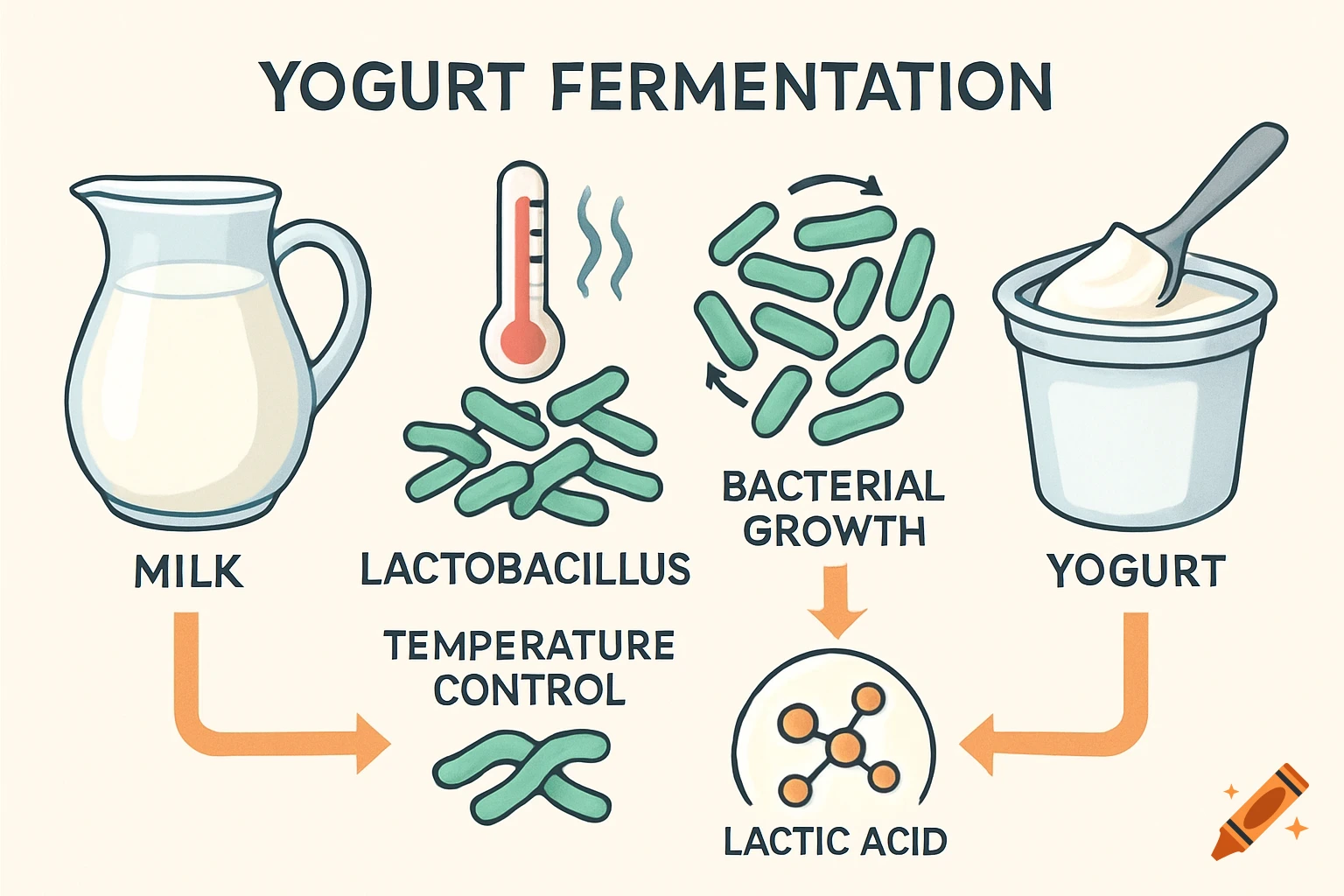 Diagram illustrating yogurt fermentation, showing milk, Lactobacillus
What Research Actually Says
Studies on frozen dairy products have shown that many probiotic strains can survive freezing for weeks or even months with no trouble at all. Some strains actually handle cold storage surprisingly well, maintaining their numbers through freeze-thaw cycles.
However — and there is always a "however" — not all strains are created equal. Some more delicate bacteria may experience a reduction in population when frozen, especially if the yogurt is stored for a very long time at inconsistently low temperatures.
The key takeaway here is that a brief freezer stint is perfectly fine. You are not going to destroy your probiotics by freezing a tub for a few days.
The Freezer Thaw: What Happens When You Bring It Back?
Here is where things get a little interesting. When you thaw frozen yogurt, many of those dormant cultures can wake back up and become active again.
It is not guaranteed that every single bacterium will return to full strength, though. Some may have been weakened during the freeze, which is why frozen yogurt usually has a slightly different texture and occasionally fewer live cultures than its fresh counterpart.
Still, plenty of studies confirm that frozen and thawed yogurt can retain a meaningful portion of its probiotic content. So your frozen stash still counts!
 Unraveling The Mystery: Butter Vs. Yogurt Cultures Explained | CyButter
Does This Make Frozen Yogurt Worth Eating?
Absolutely, and then some. Frozen yogurt gives you the delightful texture of ice cream with a nutritional edge that vanilla cones could only dream about.
It is a fantastic way to enjoy probiotics on a hot summer day or as a guilt-free dessert swap. Plus, making it at home means you control exactly what goes in — no sneaky fillers or added sugars.
Honestly, the fact that you now understand what freezing does to your yogurt makes the whole experience more enjoyable. Knowledge turns a simple snack into a little moment of appreciation.
Pro Tips for Keeping Your Frozen Yogurt Cultures Happy
If you want to maximize the probiotic survival rate in your freezer, a few simple habits go a long way. These are easy enough for anyone to follow.
- Freeze it quickly — Rapid freezing causes smaller ice crystals, which means less cellular damage to the bacteria.
- Keep the freezer steady — Constant cold storage is far better than a freezer that fluctuates between thawing and refreezing.
- Consume it within a couple of months — The sooner you enjoy it, the more live cultures you are likely to get.
- Opt for higher-quality yogurt — Strains with better cold tolerance (some labels even specify this) will handle freezing more gracefully.
See? These are not complicated rules. They are just little ways to get the most out of every spoonful.
![Can You Eat Expired Yogurt if it Was Frozen? [Safety Guide] - Waytocook](https://i.ytimg.com/vi/50nQptrbw0k/hq720.jpg) Can You Eat Expired Yogurt if it Was Frozen? [Safety Guide] - Waytocook
Can You Eat Expired Yogurt if it Was Frozen? [Safety Guide] - Waytocook
Why This Tiny Fact Makes Life More Fun
There is something satisfying about knowing exactly what happens inside your favorite foods. It transforms ordinary grocery runs into little learning adventures.
Now the next time you freeze a tub of yogurt, you will do so with confidence and maybe even a grin. You know the truth — those survivors are just sleeping, not gone.
And honestly, that is a beautiful metaphor for life too. Sometimes things look frozen, inactive, or finished, but give them time to thaw, and life comes right back.
Keep the Curiosity Going
Freezing yogurt is just one tiny thread in the enormous, wonderful tapestry of food science. There are so many more questions waiting to capture your imagination.
So go ahead — freeze it, eat it, and enjoy it without a shred of worry. Your microbiome will thank you, and your curiosity will keep growing.
The world is full of fascinating little mysteries hiding in your fridge and freezer. Stay hungry for knowledge, and let every discovery make your life a little brighter. The more you learn, the more fun you will have — every single day.
