Does Chocolate Meringue Pie Need To Be Refrigerated

Picture this: you’ve just pulled a glorious chocolate meringue pie from the oven. The meringue is a cloud of toasted peaks, the filling a dark, velvet abyss of cocoa bliss. Yo...
:max_bytes(150000):strip_icc():format(webp)/Chocolate_Meringue_Pie_010-5c5f8d9b559343e78e93b1acaf7f8738.jpg)
Picture this: you’ve just pulled a glorious chocolate meringue pie from the oven. The meringue is a cloud of toasted peaks, the filling a dark, velvet abyss of cocoa bliss. You’re ready to slice into it, but a terrible, looming question invades your kitchen: Do I have to put this in the fridge? It’s the kind of dilemma that splits households and ruins potlucks. Let’s settle this, once and for all, so you can get back to shoving pie in your face without guilt.
The Short Answer: Yes, You Really Do
Your chocolate meringue pie is basically a hostage situation involving eggs, dairy, and sugar. The meringue topping is not a protective force field; it’s a delicate structure made of whipped egg whites. If you leave it out at room temperature for more than two hours, you’re essentially inviting bacteria to a pool party in your custard.
Think of it this way: the filling is a custard—usually cooked with milk, eggs, and chocolate—which is a prime breeding ground for Salmonella and other party crashers. The USDA says perishable foods must be refrigerated within two hours, or one hour if the room is hotter than 90°F. So unless you live in a walk-in freezer, the pie goes in the fridge.
Must Read
But Wait, the Meringue Will Cry!
I know, I know—your beautiful, fluffy meringue will start weeping in the refrigerator. That’s a real, heartbreaking phenomenon called “weeping” or “beading,” where sugary beads of moisture form on top. It looks like your pie is crying, and honestly, it is.
Here’s the surprising fact: that weeping is a better problem than food poisoning. A sad-looking meringue is still delicious; a pie that gave you a stomach bug is not. To minimize the tears, let the pie cool completely at room temperature for an hour before you refrigerate it. Then, loosely cover it with plastic wrap or a cake dome to prevent the fridge’s dry air from making it sweat even more.
The One Ridiculous Exception
Is there any time you can ignore the rules? Yes, if you plan to eat the entire pie in one sitting, on the day you baked it. That’s what I call a “hero’s breakfast.” But let’s be real—when was the last time you polished off a whole pie in one go? (Don’t answer that.) For the rest of us, refrigeration is non-negotiable.
Actually, there’s another exception: if your pie has a French meringue (the kind baked in the oven) and you keep it in a very cool, dry, and non-humid environment—like a medieval cellar—you might survive. But modern homes are tropical jungles compared to that. Play it safe.
The Horror of a Room-Temperature Custard
Let’s talk about the enemy: Clostridium perfringens and Staphylococcus aureus. These bacteria love hanging out in dairy-based pies left out overnight. A single slice of unrefrigerated chocolate meringue pie can harbor enough bacteria to send you on a surprise romp to the bathroom by dawn. Not the kind of magic you want from dessert.
Then there’s the texture factor. Room-temperature custard gets runny, weepy, and sad. It loses that silky, sliceable perfection. The fridge actually helps the filling set into a glorious, jiggly but firm slice. Cold pie is better pie—tell your aunt I said so.
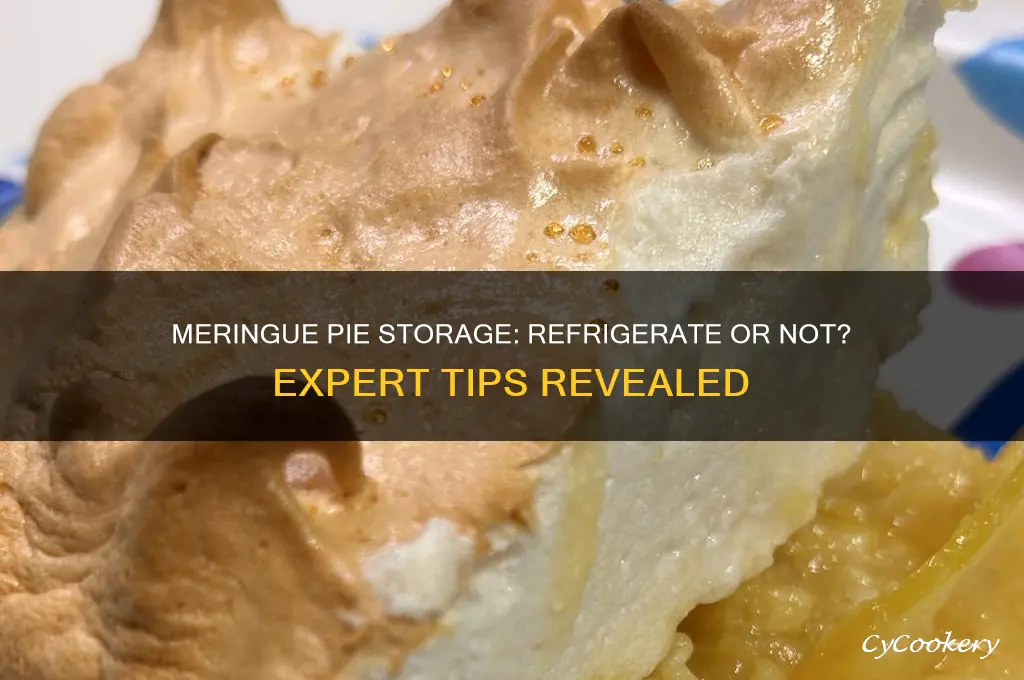 Meringue Pie Storage: Refrigerate Or Not? Expert Tips Revealed | CyCookery
The Surprising Science of Meringue Survival
Here’s a wild fact: meringue is technically a foam—a bunch of air bubbles trapped in denatured egg whites. Refrigeration dries it out, but it also slows the natural breakdown of sugar crystals. Your meringue might not look like a fashion model the next day, but it will be safe to eat for up to three days.
After three days? Throw it out. I don’t care how much you love chocolate meringue pie—a week-old slice is a science experiment, not a treat. The fridge won’t save you from mold, which can grow on the meringue crust if it gets damp.
How to Keep Your Pie Happy in the Fridge
Don’t just toss it in there like a forgotten gym bag. Let the pie cool fully (about an hour on the counter). Then, wrap it loosely in plastic wrap, or—better yet—invert a large bowl over it so the meringue doesn’t get squished. The goal is to let it breathe just enough, but not inhale all the fridge smells.
Pro tip: Place the pie on a plate away from onions, garlic, or leftover fish. You don’t want “chocolate meringue with a hint of gym sock.” Trust me, I’ve been there.
The Final Verdict (and a Joke)
Does chocolate meringue pie need to be refrigerated? Unless you’re a professional baker with a climate-controlled pastry case, yes, absolutely. Refrigerate it within two hours, eat within three days, and accept that the meringue might look a little teary-eyed. That’s the price of safety.
And remember: the refrigerator is not the enemy—it’s the bouncer at the club, keeping the bad bacteria out. So go ahead, bake that pie, chill it, and enjoy a slice of cold, creamy, safe decadence. Your taste buds—and your intestines—will thank you.
:max_bytes(150000):strip_icc():format(webp)/Chocolate_Meringue_Pie_010-5c5f8d9b559343e78e93b1acaf7f8738.jpg&description=Does+Chocolate+Meringue+Pie+Need+To+Be+Refrigerated)