Do You Need To Refrigerate Apple Crisp After Baking

There are few desserts more comforting than a warm bowl of apple crisp, its golden, crumbly topping giving way to tender, cinnamon-spiced fruit beneath. Whether enjoyed after...

There are few desserts more comforting than a warm bowl of apple crisp, its golden, crumbly topping giving way to tender, cinnamon-spiced fruit beneath. Whether enjoyed after a cozy Sunday dinner or as a sweet treat on a crisp autumn evening, apple crisp embodies the simple joy of homemade baking. Its key purpose is to offer a rustic, less fussy alternative to pie, delivering the same soul-warming satisfaction with minimal effort. For everyday life, this dessert is a champion of convenience, forgiving of imperfections, and always a crowd-pleaser. Imagine pulling a bubbling dish from the oven on a busy weeknight; that contrast between the hot, caramelized apples and a scoop of cold vanilla ice cream is a small but profound pleasure.
But once the dessert cools and the last guest has left, a practical question arises: do you need to refrigerate apple crisp after baking? The short, firm answer is yes, if you plan to keep it for more than a few hours. While a freshly baked apple crisp can safely sit at room temperature for up to two hours, it contains two ingredients that are prime breeding grounds for bacteria: moisture from the cooked apples and dairy from the butter in the topping. Leaving it out overnight, especially in a warm kitchen, invites the risk of spoilage. Refrigeration slows down microbial growth, keeping your crisp safe to eat for days rather than hours.
Understanding the why behind refrigeration helps you make better choices. The apples release a significant amount of liquid as they bake, creating a humid environment. This moisture, combined with the sugars and fats, is a perfect medium for bacteria like Staphylococcus aureus or Bacillus cereus to multiply if the temperature falls into the “danger zone” (between 40°F and 140°F). For example, consider a potluck dinner: if your apple crisp sits on the counter for three hours before and after serving, it’s safer to refrigerate leftovers immediately. A simple rule of thumb: if in doubt, chill it out.
Must Read
However, refrigeration does change the crisp’s texture. The topping, once delightfully crunchy, will inevitably soften as it absorbs moisture from the apples. This is the one trade-off you must accept. The filling will also become denser and the flavors will meld together, which some people actually prefer—the apples taste even more infused with cinnamon and nutmeg the next day. To restore a semblance of its original texture, reheat individual portions in a toaster oven or air fryer at 350°F for 5–7 minutes. This crisps up the topping without drying out the fruit. A microwave, while quick, will turn the topping into a soggy paste, so avoid it unless you’re starved for time.
What if you want to store a large batch or prep it ahead of time? Unbaked apple crisp can be assembled, covered tightly with plastic wrap, and refrigerated for up to two days before baking. This is a brilliant trick for holiday planning. For baked leftovers, transfer the crisp to an airtight container or cover the baking dish tightly with foil or plastic wrap. Refrigerated properly, it stays fresh for 3 to 5 days. Do not leave it sitting with the foil loose; oxygen accelerates staleness and flavor loss. For longer storage, you can freeze baked or unbaked crisp for up to three months, though the topping will lose some crunch upon thawing.
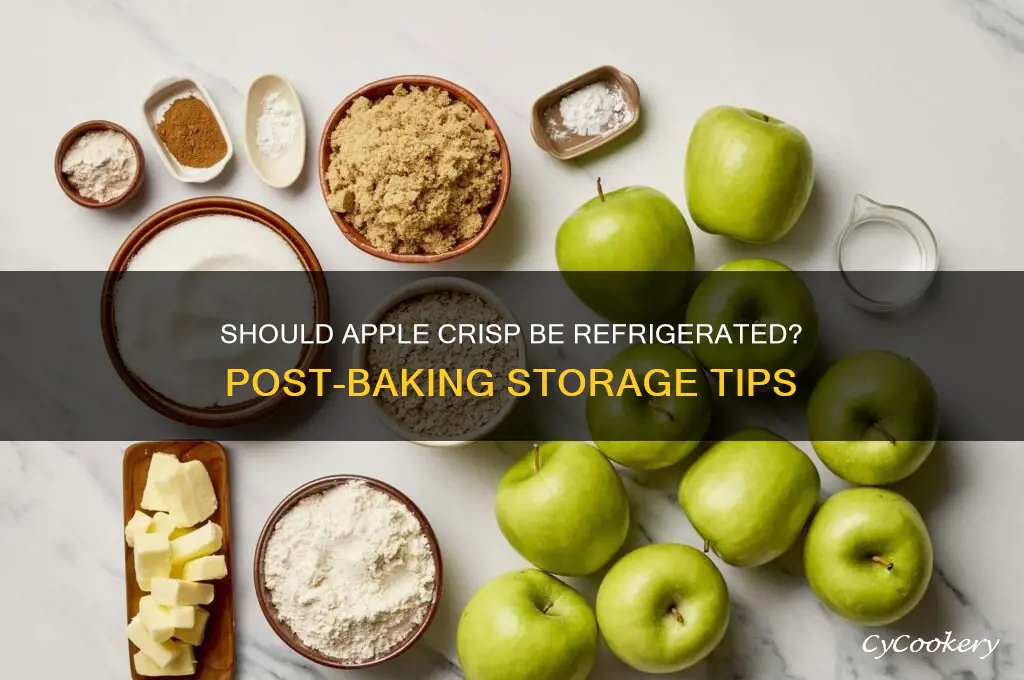 Should Apple Crisp Be Refrigerated? Post-Baking Storage Tips | CyCookery
Here are a few simple tips to help you enjoy apple crisp at its best every time. First, always cool the crisp completely at room temperature (for no longer than two hours) before covering and refrigerating. Trapping steam inside a warm container creates condensation, which ruins the topping faster. Second, for a single-serving refresh, reheat in a skillet on the stovetop over medium-low heat for about 5 minutes—the direct heat revives the crust’s crunch. Third, experiment with a more stable topping: replace half the butter with coconut oil or cold cream cheese, which can help the crumble hold its texture better after refrigeration. Finally, embrace the leftover cold crisp straight from the fridge on a hot day; it transforms into a wonderful, chewy, breakfast-worthy treat that pairs surprisingly well with yogurt.
In conclusion, refrigerating apple crisp after baking is not optional for safety, but it is a manageable compromise for convenience. By understanding how to store, reheat, and even prep it in advance, you can ensure that every leftover spoonful retains as much joy as the first warm bite from the oven. The key is to balance food safety with smart texture management—so you can savor this humble dessert without worry, whether it’s fresh, chilled, or reheated days later.

