Do Fruit Flies Grow Into Big Flies

There’s something oddly satisfying about a question that sounds silly but actually gets at a bigger, more interesting truth. The idea of fruit flies turning into big flies is...

There’s something oddly satisfying about a question that sounds silly but actually gets at a bigger, more interesting truth. The idea of fruit flies turning into big flies is one of those classic kitchen counter myths—perfect for a lazy afternoon when you’re staring at a neglected banana and wondering where all those tiny specks came from. This topic is genuinely enjoyable because it bridges everyday life with a tiny splash of science, and it’s practical for anyone who’s ever battled a sudden swarm. The main purpose here is simple: clear up the confusion so you can stop wondering and start solving the real problem. Whether you’re a curious kid, a frustrated home cook, or just someone who loves a good “aha” moment, understanding this little mystery helps you keep your kitchen calmer and your snacks safer.
So, let’s cut right to the chase: fruit flies do not grow into big flies. They are a completely separate species from the houseflies or bottle flies that buzz around trash cans. A fruit fly (Drosophila melanogaster) is born as a tiny egg, becomes a wriggling larva, then a pupa, and finally emerges as an adult fruit fly—still tiny, still with red eyes, and still obsessed with overripe fruit. Meanwhile, a “big fly” like the common housefly starts life in rotting organic matter and ends up much larger, with a different body shape and wings. The only thing they share is a love for your leftovers, not a family tree.
Why does this myth stick around? Because both insects show up in similar places—your kitchen, your compost, your garbage bin. If you see a few fruit flies one day and then a larger fly the next, it’s easy to assume the tiny ones “grew up.” But in reality, you’re just seeing two separate species attracted to the same environment. A common variation is the drain fly, which looks like a tiny moth—another false cousin. Recognizing these differences is key: fruit flies are tan with red eyes, drain flies are fuzzy and dark, and houseflies are fat and gray. Knowing what you’re dealing with is the first step to outsmarting them.
Must Read
Here’s the actionable part: to prevent fruit flies, don’t try to “grow” them into anything—just remove their food. Start by checking your fruit bowl daily and pitching anything with a bruise or a brown spot. Wash your bananas and apples the moment you bring them home, because fruit fly eggs can hitch a ride from the store. Another quick win: pour boiling water down your sink drains once a week, since a thin film of food residue can host fruit fly larvae. And if you already have an infestation, make a simple trap by filling a jar with apple cider vinegar, covering it with plastic wrap, and poking small holes. The flies dive in for the smell but can’t get back out.
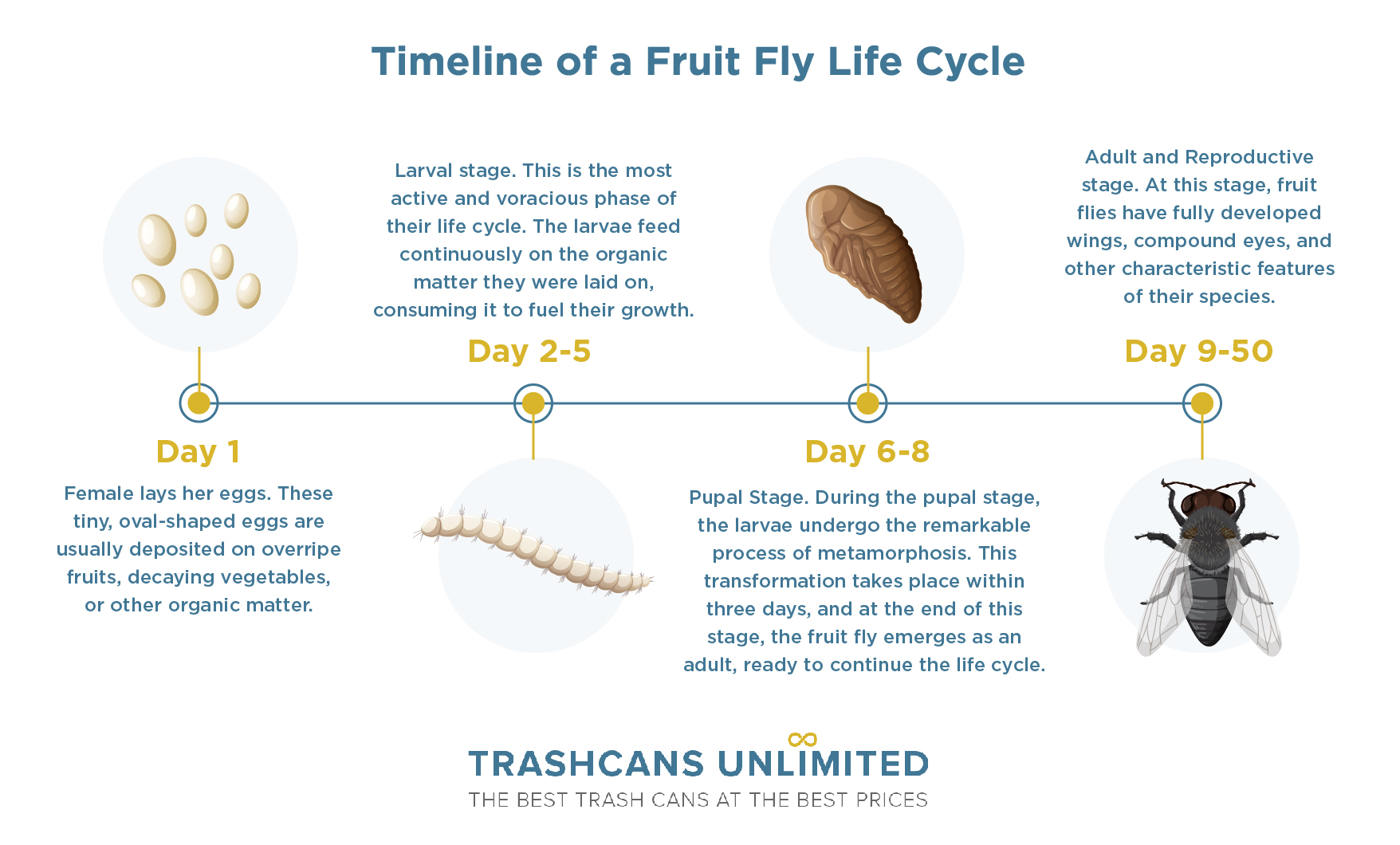 The Fruit Fly’s Life Cycle: A Full Timeline - Trash Cans Unlimited
For people who love gardening or fermenting, this topic gets even more practical. Home brewers and kombucha makers often mistake fruit flies for bigger pests. The truth is, fruit flies are drawn to the yeast smell, but they won’t turn into houseflies—they’ll just multiply like crazy if you leave a spill. A tip from experts: seal your fermentation vessels with cheesecloth and a rubber band. This keeps the tiny flies out while letting air in. Similarly, if you keep compost indoors, cover it with a tight lid or a layer of dry leaves to break the breeding cycle at the larval stage.
So next time you see a fruit fly hovering over a tomato, you’ll know: it’s not a baby housefly. It’s a fully grown, clever little creature living its best four-millimeter life. Embrace the small victory of knowing the difference—it means you’re one step closer to a fruit-fly-free kitchen. And honestly, that’s a pretty easy-going win for any day of the week.
