Difference Between Whisky And Scotch Whisky

Let’s be real—walking into a liquor store can be confusing. You see “whisky” and “Scotch whisky” on bottles, and it’s easy to assume they’re the same thing. But knowing the di...
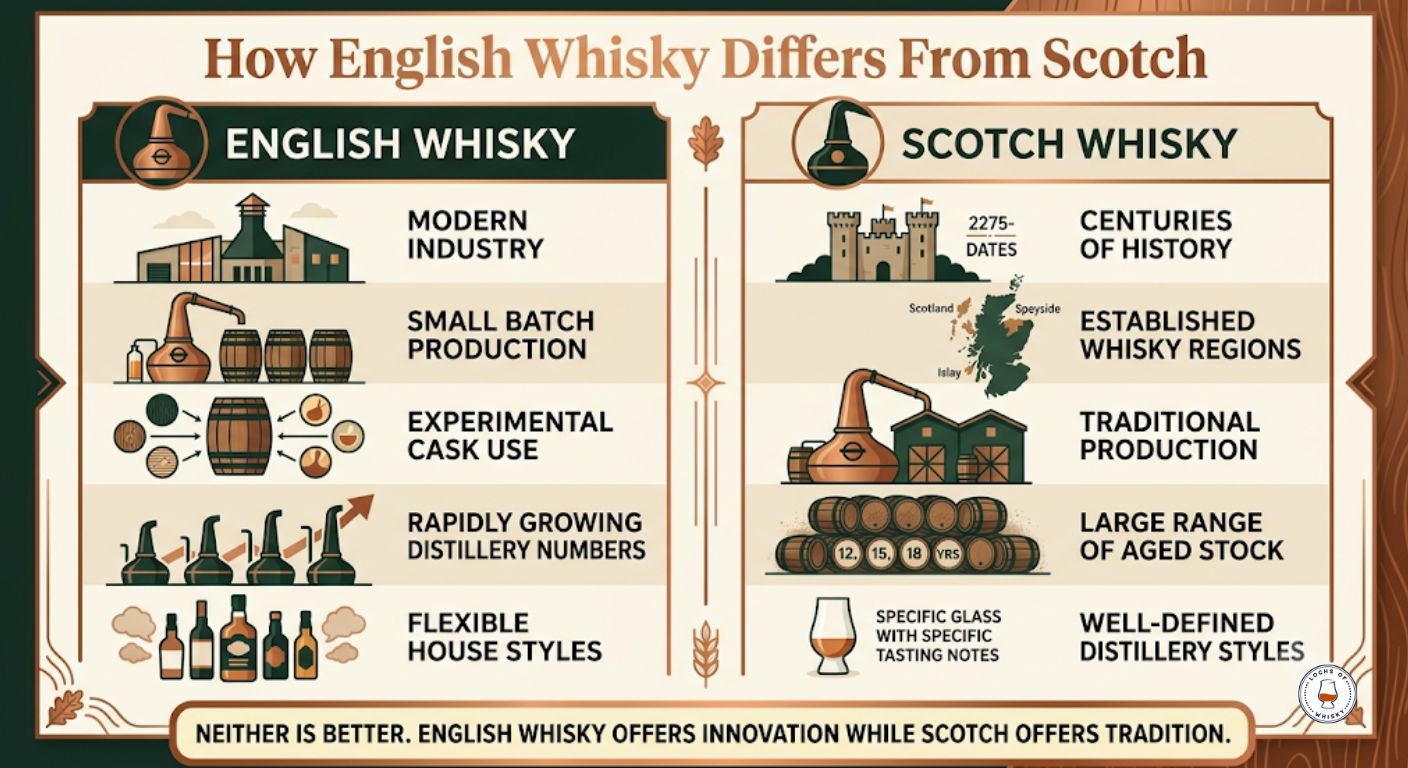
Let’s be real—walking into a liquor store can be confusing. You see “whisky” and “Scotch whisky” on bottles, and it’s easy to assume they’re the same thing. But knowing the difference isn’t just trivia for snobs; it’s a game-changer for your wallet, your taste buds, and even your social life. Getting it right means you’ll never waste money on a bottle that doesn’t deliver what you actually want. For families, it means avoiding that awkward moment when you gift someone a “nice whisky” that turns out to be a cheap blend they hate. For communities, it’s about supporting authentic traditions—like the Scottish distilleries that have been crafting liquid gold for centuries. Imagine hosting a party and casually explaining why your Scotch tastes like smoky peat while your American rye is sweet and spicy. That’s the kind of knowledge that makes you the hero of the gathering, not just another guest.
So, what’s the core difference? All Scotch is whisky, but not all whisky is Scotch. Think of it like champagne: only bubbly from the Champagne region of France gets the name. Scotch must be made in Scotland, using malted barley, and aged for a minimum of three years in oak casks. That’s the law. Meanwhile, “whisky” (or “whiskey” with an ‘e’ for Irish and American versions) can come from anywhere—Canada, Japan, India—and use grains like corn, rye, or wheat. This matters because the rules create distinct flavors. Scotch often brings earthy, smoky notes from peat fires, while an American bourbon (a type of whisky) is sweet from corn and vanilla from new charred barrels. If you’ve ever sipped a Scotch and thought, “This tastes like a campfire,” you’ve just tasted the peat that Scotland is famous for.
Why should you care? For starters, it saves you cash. A bottle labeled “Scotch” usually carries a higher price tag because of strict production limits, import taxes, and long aging. But if you’re after a smooth sipper for a quiet evening, a blended Scotch (like Johnnie Walker Black) can be a perfect, budget-friendly choice. On the flip side, if you’re making cocktails for a big family barbecue, a rye whisky from America or a Canadian whisky will hold up better against mixers without breaking the bank. Real-life example: My neighbor bought a $60 bottle of single malt Scotch for a party, mixed it with cola, and ruined it. He should have grabbed a $25 Canadian whisky instead. For families, this distinction helps you pick the right bottle for the right moment—a celebratory toast or a casual weeknight drink.
Must Read
Let’s talk real-life enjoyment. Picture a cold night by the fire with your partner. You want something warm and complex. A single malt Scotch—like a Glenfiddich 12-year—offers layers of honey, apple, and a hint of smoke. It’s meant to be sipped slowly, neat or with a drop of water. Now imagine a summer cookout with friends. You’re making old-fashioneds. A bourbon (an American whisky made from at least 51% corn) brings caramel sweetness that pairs perfectly with orange and bitters. Or maybe you’re hosting a tasting night for your book club. A Japanese whisky, often lighter and more floral, can surprise everyone with its elegance. The key is matching the drink to the vibe. Scotch is for reflection; other whiskies are for celebration.
Here are practical tips to use this knowledge tomorrow. First, read the label carefully. If it says “Scotch Whisky,” it’s from Scotland. If it says “Whiskey” with an ‘e,’ it’s likely Irish or American. Look for words like “single malt” (meaning it’s from one distillery) vs. “blended” (a mix of different whiskies). Second, ask your liquor store clerk: “Is this smoky or smooth?” Smoky usually means Scotch from Islay region; smooth often means Irish or Canadian. Third, try a side-by-side tasting at home. Buy a small bottle of Johnnie Walker Red Label (a blended Scotch) and a bottle of Wild Turkey 101 (a high-proof bourbon). Sip them one after the other. You’ll instantly feel how the Scotch dries your mouth with smoke, while the bourbon coats it with sweet warmth. That’s the difference in your own mouth.
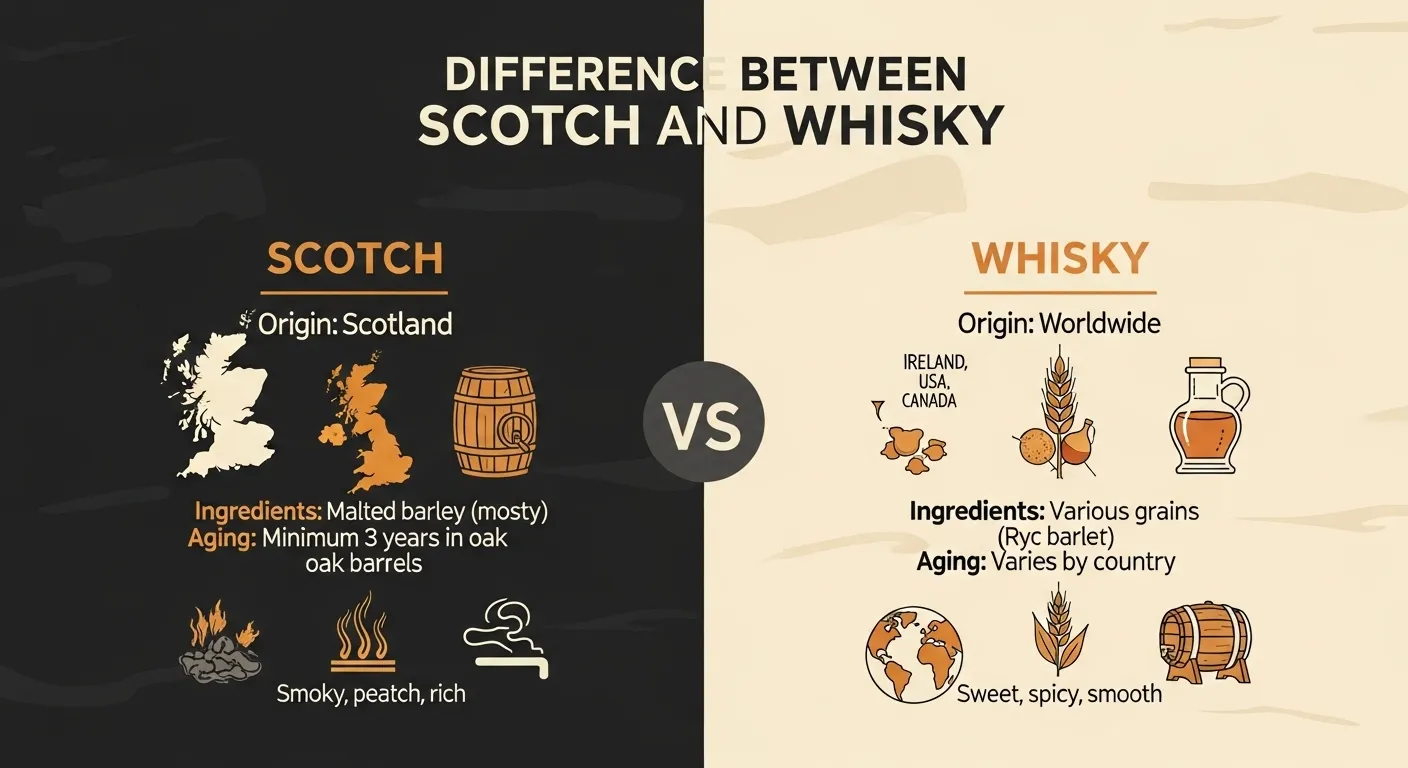 Difference Between Scotch and Whisky: Types, Taste, and Origins
Finally, avoid the common mistake of thinking older is always better. A 12-year-old Scotch isn’t automatically “better” than a 6-year-old rye whisky. Age matters, but so do the grains, the cask type, and the climate. For example, a young rye whisky from Canada can be incredibly vibrant and spicy, perfect for a Manhattan cocktail. An older Scotch might be too delicate and get lost in the same drink. For families on a budget, a 3-year-old Scotch (the minimum legal age) like a good blended malt can be a steal, while a 25-year-old single malt is a luxury for special anniversaries. Don’t be fooled by numbers—trust your own taste.
In the end, knowing the difference between whisky and Scotch whisky turns you from a confused buyer into a confident connoisseur. It’s not about snobbery; it’s about making smarter choices that enrich your personal moments, family gatherings, and community traditions. Whether you’re toasting a promotion with a peaty Scotch or mixing up a round of highballs with a smooth Japanese whisky, you’re now equipped to enjoy every sip with purpose. So next time you’re at the store, remember: all Scotch is whisky, but the best whisky is the one that fits your moment. Cheers to that.
