Difference Between Stone Ground And Dijon Mustard

Let’s be honest: the mustard aisle can feel a little intimidating, right? You’ve got jars with fancy French labels and other ones that look like they came straight from a pion...
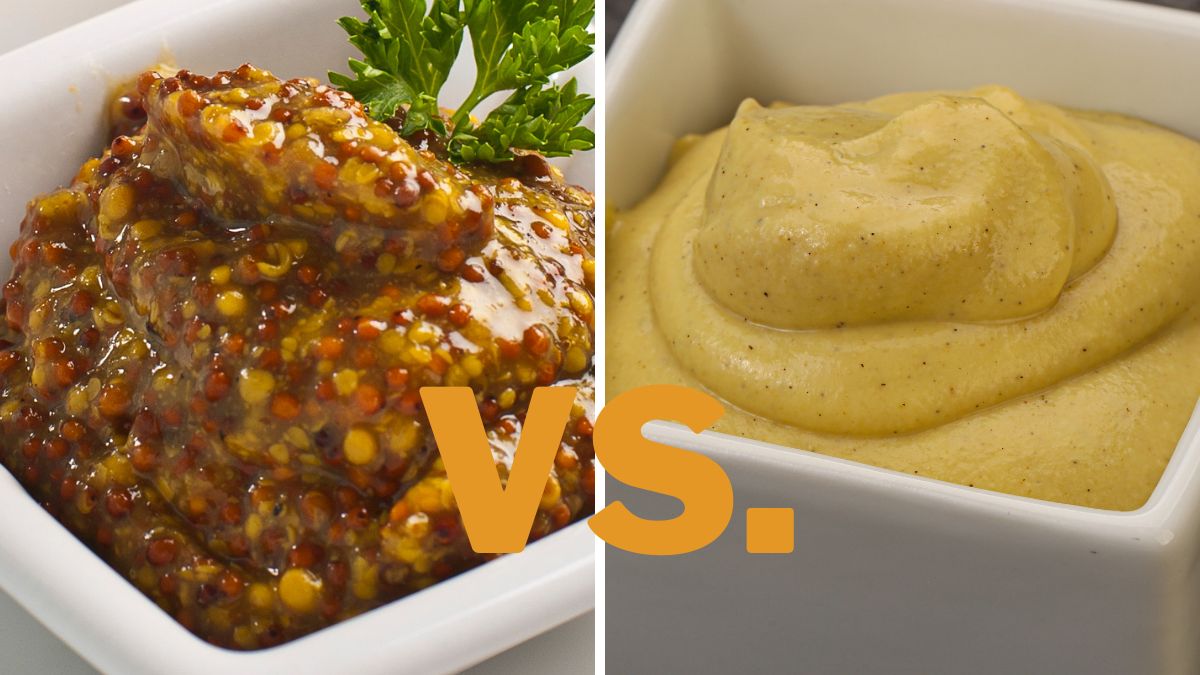
Let’s be honest: the mustard aisle can feel a little intimidating, right? You’ve got jars with fancy French labels and other ones that look like they came straight from a pioneer’s wagon. But here’s the good news: understanding the difference between stone ground and Dijon mustard is not only easy—it’s actually a lot of fun.
Think of this as your back-pocket guide to making sandwiches, dressings, and even marinades way more exciting. Once you know what each one brings to the table, you’ll start seeing condiments as little secret weapons.
And honestly, who doesn’t want to be the person who casually drops, “Oh, this vinaigrette? It just needed a little stone ground character”? You’ll look like a culinary genius.
Must Read
The Tale of Two Very Different Mustards
First up: stone ground mustard. This is the rustic, “I’ve been on a farm and I’m proud of it” kind of mustard. It’s made by gently crushing mustard seeds between two heavy millstones—hence the name stone ground.
The result? You get a wonderfully textured paste with whole and partially crushed seeds. It’s like a crunchy, spicy surprise in every bite.
Now, Dijon mustard is the smooth operator. It comes from the city of Dijon in France, and it’s all about that silky, creamy finish. To make it, the seeds are fully ground and then mixed with white wine or verjuice (the juice of unripe grapes).
The texture is flawlessly smooth. Think of it as the velvet suit of the mustard family—elegant, a little sharp, and always ready for a fancy dinner.
Flavor: The Punchy vs. The Punchier
Here’s where things get delicious. Stone ground mustard is often a bit milder and more earthy. Because the seeds aren’t pulverized, they release their heat more slowly.
You get this lovely, almost nuttiness, followed by a gentle warmth that builds. It’s the kind of mustard that makes you stop and think, “Huh, that’s interesting!”
Dijon, on the other hand, is a bold, sharp wallop right up front. It has a clean, tangy heat that cuts through fatty meats and creamy sauces like a laser beam.
It’s the same kind of zest you get from a squeeze of lemon, but with a spicy kick. Dijon doesn’t just complement food—it demands your attention.
When to Reach for Which Jar (And Why It Matters)
So, when do you use these mustard twins? Think of stone ground as your everyday adventurer. It’s perfect on a thick deli sandwich, a bratwurst, or even rubbed onto pork chops before grilling.
The little seeds add a wonderful crunch and visual pop. It’s the kind of mustard that says, “I take my weekend barbecue very seriously.”
Dijon, meanwhile, is your secret ingredient for sauces and dressings. A single teaspoon of Dijon can transform a boring vinaigrette into something that tastes like it came from a Parisian café.
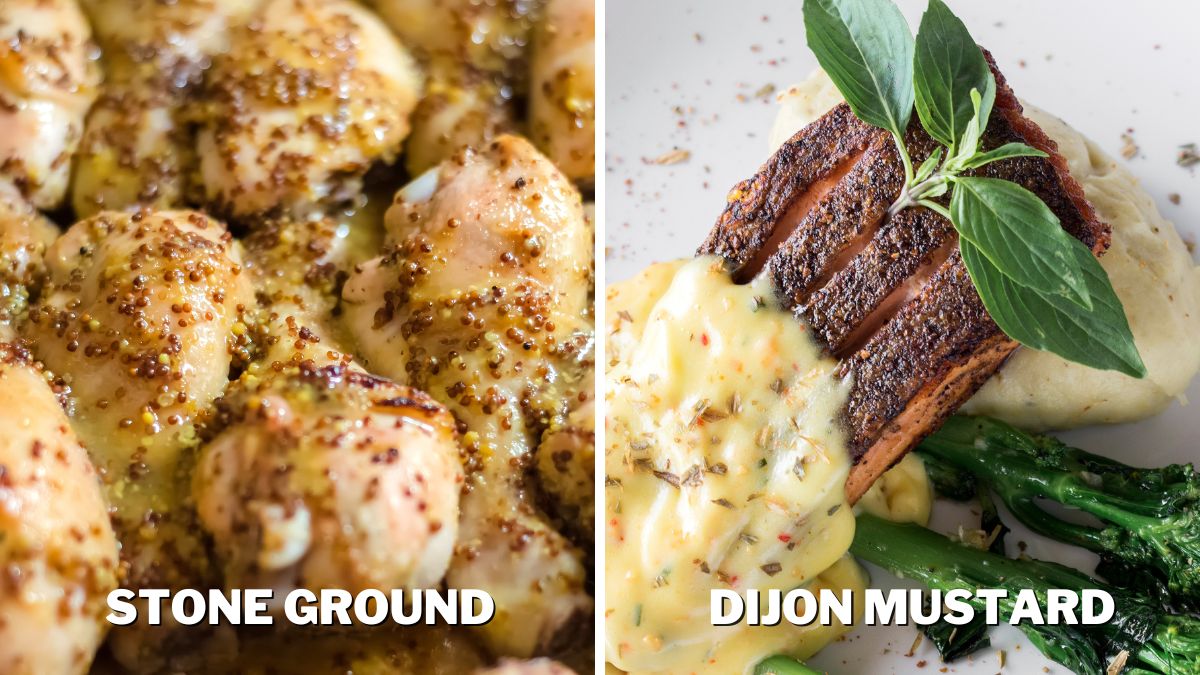 Stone Ground Mustard vs. Dijon: Differences & Uses
It’s also the star of creamy sauces—like a classic Dijon cream sauce for chicken or salmon. Because it’s so smooth, it mixes perfectly without leaving weird little seed bits everywhere.
The Big, Life-Changing Secret
Here’s the lighthearted truth: you can have both in your fridge. That’s the whole point. They’re not competitors; they’re a dream team.
Keep stone ground for the rustic, crunchy moments when you want texture and a slow burn. Keep Dijon for when you need a smooth, sharp punch that dissolves into a sauce.
And once you start swapping them into recipes? Oh, you’ll never look at a hot dog or a salad the same way again. You might even start experimenting with honey mustard or whole grain varieties.
Why Learning About Mustard Actually Makes Life More Fun
I know what you’re thinking: “It’s just mustard, right?” But no—this is a tiny lesson in curiosity. When you learn to appreciate the small differences in ingredients, you start to notice the world more fully.
A little knowledge about stone ground versus Dijon can turn a boring lunch into a moment of delicious discovery. Suddenly, you’re not just eating—you’re choosing.
And that’s a very empowering feeling. You get to decide whether your sandwich needs a crunchy, rustic accent or a smooth, zesty kick.
Your Next Bold Move
So here’s your mission, should you choose to accept it: next time you’re at the grocery store, pick up one jar of stone ground and one jar of Dijon. Grab a baguette and some good cheese, too.
Make yourself a little tasting board. Try a dollop of each on a cracker. Notice the texture, the heat, the way they make your taste buds dance.
You’re not just learning about mustard—you’re learning to savor the details. And that, my friend, is how you turn an ordinary day into a little celebration.
Go ahead and explore. The world of condiments is wide, weird, and wonderfully yours to enjoy.
