Difference Between Request For Evidence And Request For Additional Evidence

Ever found yourself in a situation where you're trying to prove something, like your age at a bar or your address to get a package delivered? You know, those moments when you'...
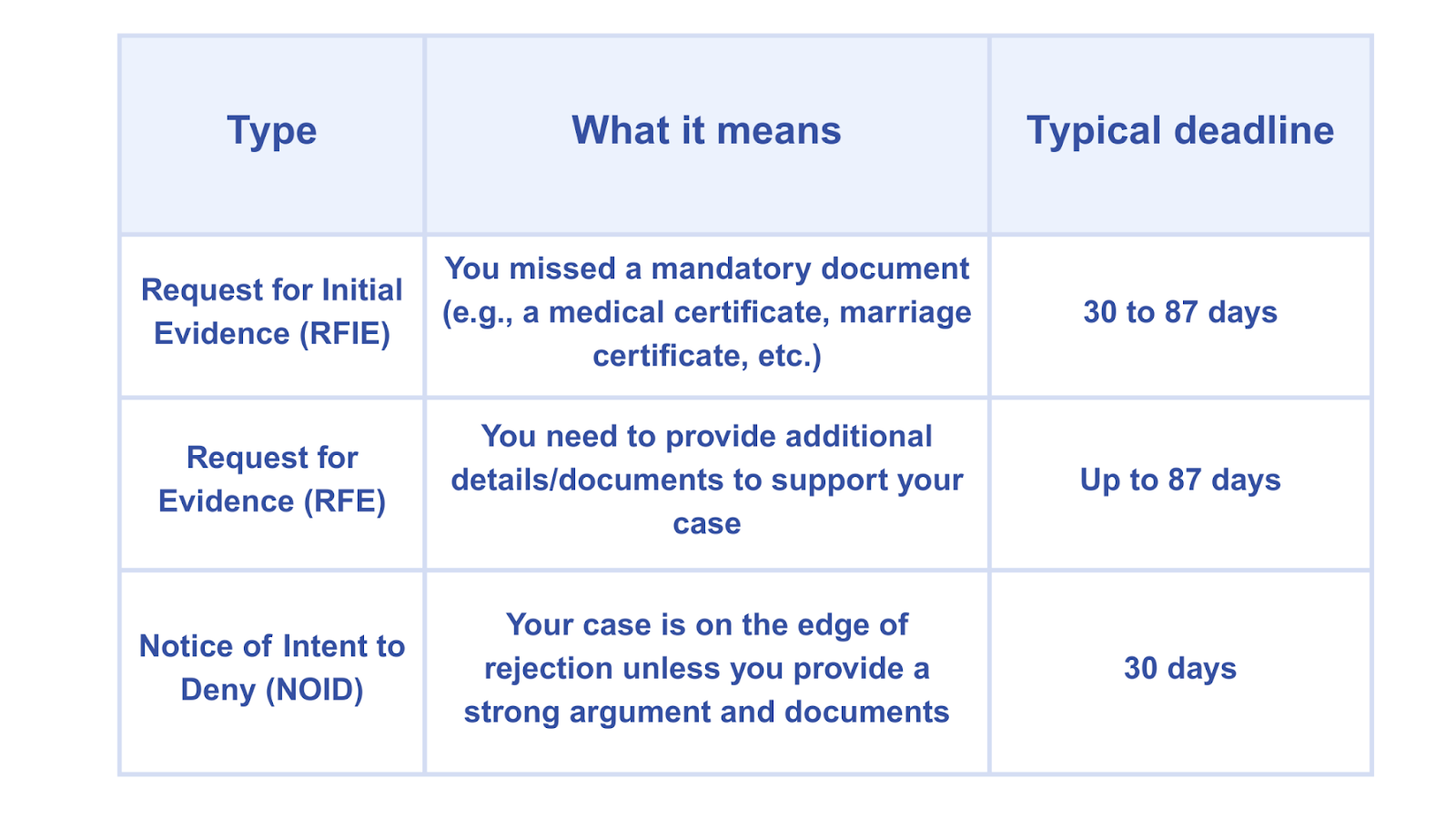
Ever found yourself in a situation where you're trying to prove something, like your age at a bar or your address to get a package delivered? You know, those moments when you're like, "Hold on, let me dig out my ID/wallet/that crumpled receipt." Well, imagine you're dealing with an immigration officer, and they're asking for some extra info to process your visa. That's where Requests for Evidence (RFEs) and Requests for Additional Evidence (RFAs) come into play. Let's chat about these two, using some everyday examples to keep it real.
First Things First: What's the Difference?
Alright, so RFEs and RFAs might sound like fancy terms, but they're basically just the immigration version of, "Can you show me that again, please?" The main difference is who's asking and when.
Request for Evidence (RFE)
An RFE is like when your teacher asks you to show your work in a math problem. It's usually sent by the immigration officer after they've reviewed your initial application. They might be a bit confused about something or need more info to make a decision. For example, if you've applied for a student visa, they might ask for more details about your chosen course or proof of funds to support yourself.
Must Read
Think of it like this: You're applying for a job, and the HR person asks for a copy of your diploma. You send it, but they're not sure if it's the original, so they ask for a certified copy. That's an RFE!
Request for Additional Evidence (RFA)
An RFA, on the other hand, is more like when your mom asks you to pass the salt at the dinner table. It's usually requested during an interview or in person, and it's for info that wasn't provided in the initial application. For instance, if you're applying for a green card and the officer wants to clarify something about your marriage, they might ask for more evidence right then and there.
 Request for Evidence (RFE) | What It Means & How to Respond
Imagine you're at the DMV, trying to get your driver's license renewed. The clerk asks for your birth certificate, but you only have a copy. They might ask you to come back with the original - that's an RFA!
Why Should You Care?
You might be thinking, "Why should I care about these? I'll just give them what they want." Well, here's why it matters:
 Request for Evidence | Meaning & What to Do Next
- Time is money: The more organized you are, the less time you'll spend running around, gathering documents. Plus, RFEs and RFAs can delay your application's processing time.
- Stay stress-free: Knowing the difference between RFEs and RFAs can help you prepare better. You'll know exactly what to expect and when to expect it.
- Prove your point: The right evidence can make or break your case. Understanding these requests can help you provide the best possible evidence to support your application.
Think of it like a game of 20 questions. The immigration officer is trying to figure out if you're eligible for that visa or not. The more accurate and relevant info you provide, the quicker they can make a decision. And who doesn't want a quick and easy process?
Now You Know
So there you have it! RFEs and RFAs are just two ways the immigration system asks for more info. Next time you're dealing with an application, you'll know exactly what to expect. And who knows, maybe you'll even find it a little bit fun. After all, every 'yes' starts with an 'ask'!
Stay informed, stay organized, and happy applying!
