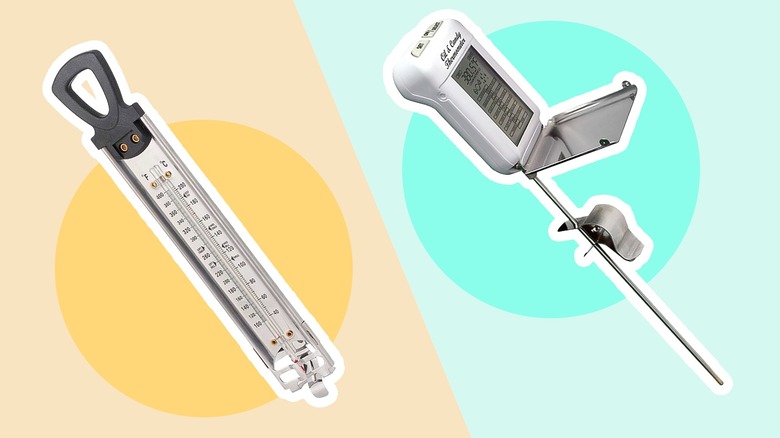
Difference Between Meat And Candy Thermometer

Hey friend, pull up a chair and grab a snack, because today we're diving into a topic that surprisingly comes up more than you'd think — the difference between a meat thermome...
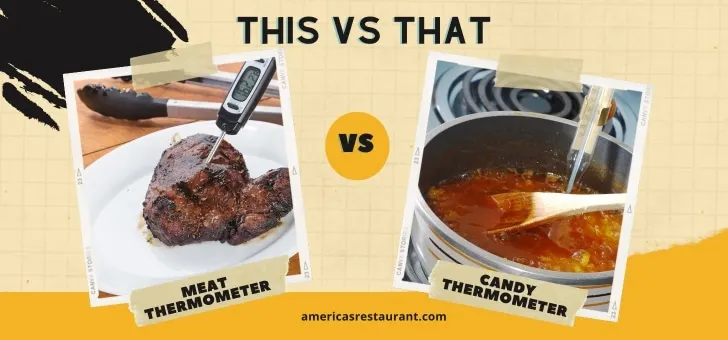
Hey friend, pull up a chair and grab a snack, because today we're diving into a topic that surprisingly comes up more than you'd think — the difference between a meat thermometer and a candy thermometer. Now, before you roll your eyes and think, "It's just a thermometer," hear me out. These two are as different as a Sunday roast and a birthday cupcake, and knowing when to use which one could actually save your dish from an absolute disaster.
Let's start with the meat thermometer, shall we? This little hero is designed to measure the internal temperature of your foods, mostly your proteins — beef, chicken, pork, turkey, you name it. It's built to handle those smoky, sizzly environments of ovens and grills, which means it comes with a long, sturdy probe that you can safely poke into whatever you're cooking. Some even have a meat-friendly design with a flat surface so it won't break or roll off your kitchen counter. Handy, right?
The working range for meat thermometers typically sits somewhere between 0°F and 220°F for digital models, though a good instant-read one can go higher. This range is perfectly suited for checking whether your chicken is reaching a safe 165°F or whether that steak is sitting at a juicy medium-rare 130°F. Basically, meat thermometers are all about doneness and food safety. Nobody wants to serve a pink chicken — trust me on that one.
Must Read
Now, let's talk about the candy thermometer, because this one is like the diva of the kitchen gadget world. Its job is to monitor the temperature of sugar syrups and candy mixtures, and it covers a much wider range — from about 100°F all the way up to 400°F. That's because candy making is extremely precise. You need to hit exact stages like soft ball, hard crack, or thread, and a difference of just a few degrees can mean the difference between perfect fudge and an inedible sugar rock.
 Digital Candy Spatula Thermometer, Read Meat and Candy Thermometer
Physically, candy thermometers usually have a long stem with a clip that attaches to the side of your pot, keeping them securely in place while you stir away. The face is unmistakably designed for quick, clear readings so you're not fumbling around with boiling sugar — because, let's be honest, caramel is unforgiving and pastry cooks have scars to prove it.
So what happens if you mix them up? Using a meat thermometer for candy might not reach those higher temperatures, giving you incorrect readings and potentially ruining your batch. And using a candy thermometer for meat? That probe might burn you, and the design isn't optimized for piercing into those thick cuts of beef. In short, the wrong tool means wrong results, and possibly a kitchen meltdown.
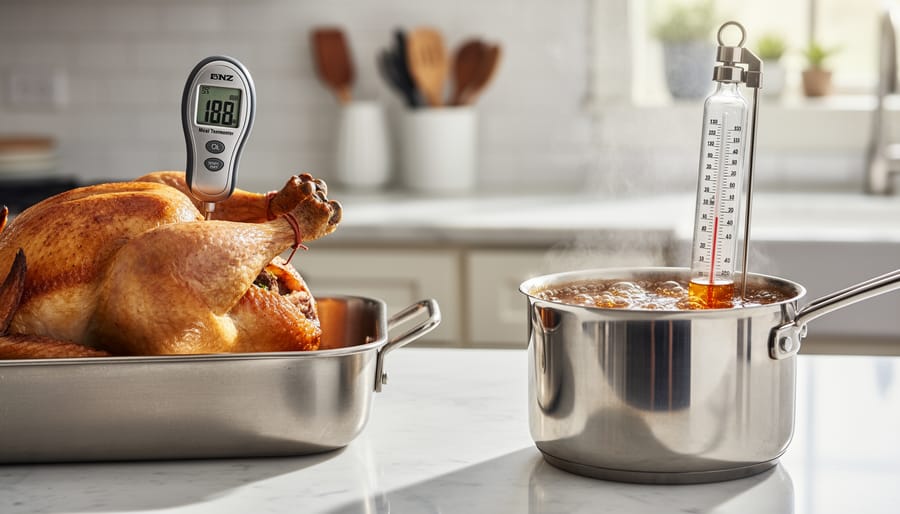 Why Your Meat Thermometer Won't Work for Holiday Candy (And What Will
Moral of the story? Choose your thermometer the way you'd choose a travelling companion — make sure it's built for the journey. A meat thermometer keeps your dinners safe and delicious, while a candy thermometer makes sure your sweets are nothing short of legendary. Both are trusted sidekicks that deserve a special spot in your kitchen drawer.
And isn't it wonderful that something as simple as the right temperature can bring so much joy to our everyday cooking? Life is a bunch of tiny details, and getting them right makes everything just a little bit sweeter — literally and figuratively. So go ahead, pick up that thermometer, cook with confidence, and remember: you've got this. Happy cooking, friend! 😊