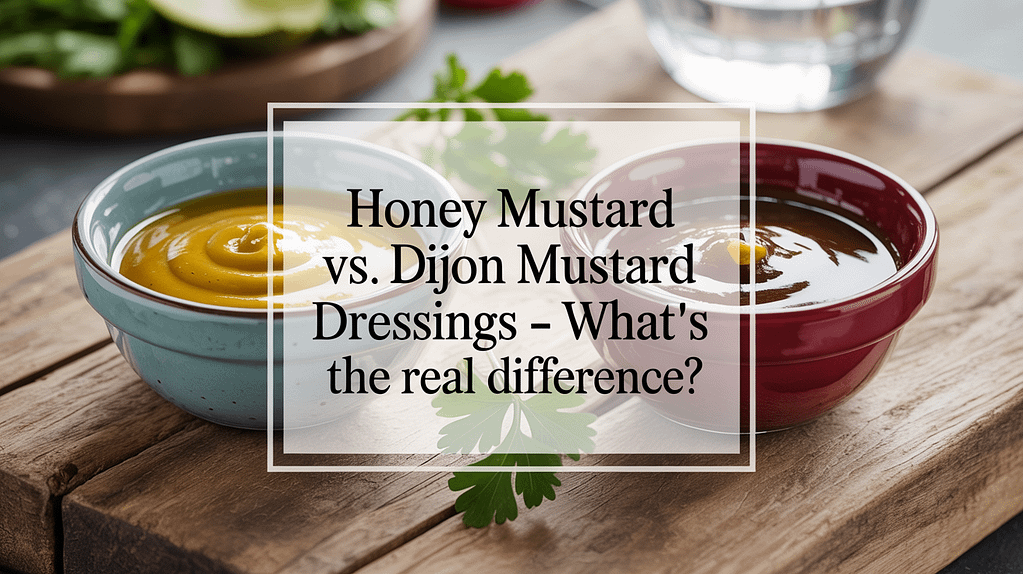
Difference Between Honey Mustard And Dijon Mustard

Okay, let’s be real: standing in the condiment aisle can be a genuinely stressful life choice. You’ve got ketchup (reliable), mayo (the plot thickener), and then… the mustards...
Okay, let’s be real: standing in the condiment aisle can be a genuinely stressful life choice. You’ve got ketchup (reliable), mayo (the plot thickener), and then… the mustards. And honestly, honey mustard and Dijon mustard seem to live in the same yellow-and-brown universe, but they are not the same. Not even close. Let’s break this down like we’re gossiping over a charcuterie board.
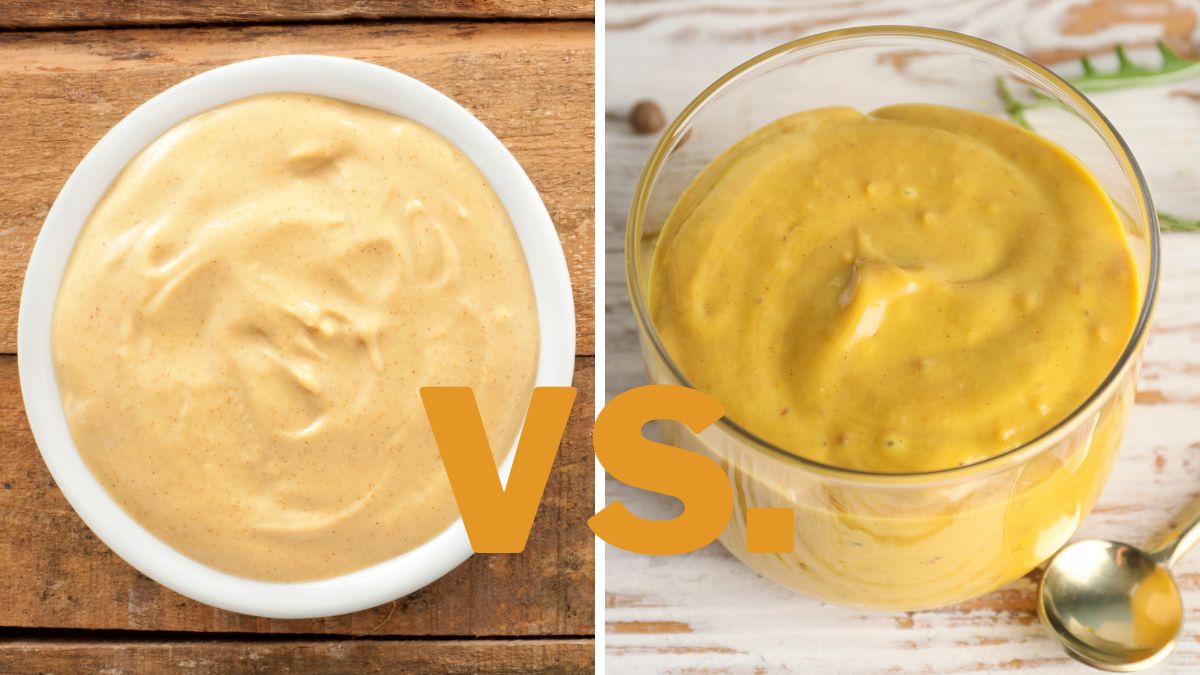
First, let’s talk about Dijon mustard. This is the sophisticated, slightly snobby French cousin of the mustard family. It’s made from brown or black mustard seeds, and it gets that signature pale-yellow color from the hulls being removed. The secret weapon? Verjus (the juice of unripe grapes) or white wine. This gives Dijon its sharp, tangy, almost aggressive kick. It’s the mustard that says, “I’m not here to be your friend, I’m here to wake up your taste buds.” I once read that real Dijon can clear your sinuses faster than a neti pot—trust me, it’s true. It’s perfect for vinaigrettes, marinades, or slathering on a sandwich when you want to feel like you’re eating in a Parisian café (while wearing sweatpants).
Now, honey mustard. Oh, sweet, sweet honey mustard. This is the mustard that apologizes for being mustard. It’s the people-pleaser, the diplomat of the condiment world. It starts with a base of yellow or Dijon mustard, but then—and here’s the magic—it gets drenched in honey. That’s right: honey. The result is a creamy, golden, sweet-tangy sauce that makes you want to dip everything in it. Chicken tenders, pretzels, even broccoli (don’t judge me, it’s delicious). Honey mustard is the condiment equivalent of a warm hug from a golden retriever. It doesn’t bite—it nuzzles.
Must Read
So, what’s the real difference? It’s all about the vibe. Dijon is heat and complexity; honey mustard is sweetness and approachability. One is a weapon, the other is a treat. Think of it this way: if Dijon is a sharp, witty comment at a dinner party, honey mustard is the dessert cart coming out. Both are good, but they serve totally different moods. Also, check the sugar content. Honey mustard usually has about a hundred times more sugar (I did not do the math, but I feel it in my soul). Dijon is practically sugar-free, which means you can smear it on your eggs without guilt. Honey mustard? You’ll be glowing with sweetness for hours.
Now, the playful aside you didn’t ask for: have you ever tried mixing them? Because that’s a thing. A little Dijon in your honey mustard adds a grown-up kick. A little honey in your Dijon? That’s called “breakfast” when you’re having ham and eggs. It’s a beautiful, unstable relationship. But if you’re ever lost in the sauce aisle, remember this simple rule: Dijon is for when you want to taste something complex; honey mustard is for when you want everything to taste like a celebration.
 Dijon Mustard vs. Honey Mustard: Differences & Which Is Better
Here’s the thing, friend: you don’t have to choose. Life is too short to pick just one mustard. Keep Dijon in the fridge for the days you need a zesty wake-up call, and keep honey mustard nearby for the moments you want to dip your fingers (and your heart) into something sweet. Both are valid, both are delicious, and both will make your food happier.
So go ahead: drizzle, dip, and slather. Whether you’re team “sharp and spicy” or team “sweet and sticky,” remember that the best condiment is the one that makes you smile. And if you ever feel overwhelmed? Just grab a spoonful of each. You’re a condiment champion. Now go eat something wonderful—preferably with a little mustard on it. 🍯🥄