Difference Between Active And Passive Immunity

Alright, gather 'round, folks. Today, we're diving into the world of immunity - yes, the kind that keeps you from turning into a sneezing, sniffling mess at the slightest bree...

Alright, gather 'round, folks. Today, we're diving into the world of immunity - yes, the kind that keeps you from turning into a sneezing, sniffling mess at the slightest breeze. We're talking about active and passive immunity, and I promise, by the end of this, you'll feel like a superhero, ready to take on the common cold like a boss.
Active Immunity: Your Body's Own Superhero Squad
Imagine your body is like a bustling city, and you've got a team of superheroes - let's call them the Immune Squad - patrolling the streets, ready to save the day. These guys are your white blood cells, and they're the stars of our active immunity show.
Active immunity happens when your body encounters a germ and learns to fight it off. It's like training day for your Immune Squad. The first time they meet a new villain (like the flu), they might need a few rounds to figure out how to beat it. But once they do, they remember that fight and are ready for next time. That's why you usually don't catch the same illness twice - your squad's got that villain's moves down pat!
Must Read
Now, active immunity can happen in two ways. First, you can catch a disease naturally (like when you shared that lollipop with your germ-ridden friend in kindergarten). Or, you can get vaccinated. Vaccines are like giving your Immune Squad a cheat sheet on how to beat a disease without actually making them sick. It's like giving them a walkthrough of a video game - they learn the moves without having to fight the boss.
Passive Immunity: The Sidekick You Didn't Know You Needed
Now, while your Immune Squad is busy training and patrolling, sometimes you need a little extra help. That's where passive immunity comes in. It's like having a trusty sidekick - let's call him Immunity Boy - who's got some special gadgets (like antibodies) to help out in a pinch.
Passive immunity happens when you get antibodies from somewhere else - like from your mom when you were a baby (thanks, mom!), or from an injection like immunoglobulin. These antibodies are like ready-made weapons against specific diseases. They can't stick around forever, but while they're there, they're like having an extra set of hands (or a sidekick) to help your Immune Squad keep you safe.
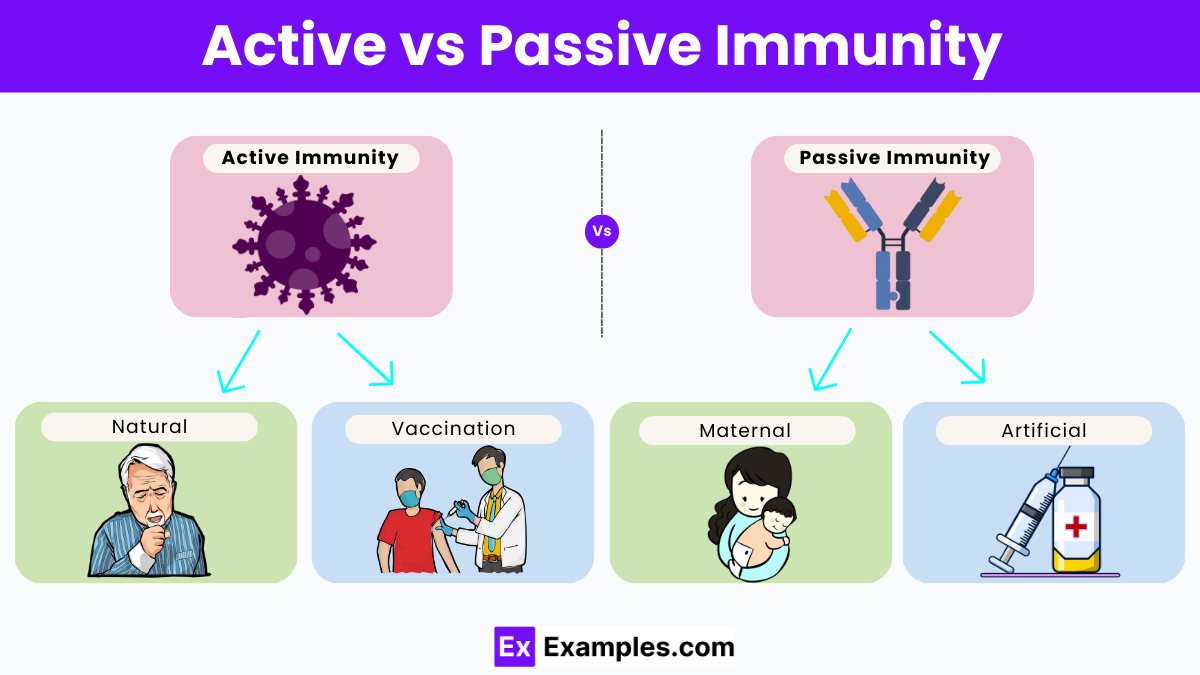 How Active and Passive Immunity Function: An In-Depth Look | Examples.com
Here's a fun fact: Did you know that moms pass on antibodies to their babies through breast milk? It's like she's giving you a little immunity boost with every feed. How's that for multitasking?
So, Which is Better? The Squad or the Sidekick?
Well, folks, it's not a competition. Both active and passive immunity are crucial for keeping you healthy. Your Immune Squad is your first line of defense, always on the job, learning and adapting. And Immunity Boy? He's there for backup, ready to lend a hand when things get tough.
Think of it like this: You've got a awesome team of superheroes (active immunity) protecting your city, and sometimes, they get a little help from the mayor (passive immunity) - maybe she sends over some extra police officers (antibodies) to help keep things safe. Both are important, and together, they make your city (your body) a tough place for bad guys (germs) to mess with.
So there you have it, folks. The next time you're feeling under the weather, remember your Immune Squad and Immunity Boy, working tirelessly to keep you healthy. And hey, if you're feeling really grateful, maybe send them a pizza. They deserve it.
