Cottage Pie Vs Shepherd's Pie

Alright, let’s settle this once and for all, because I’m tired of seeing perfectly good comfort food dragged through the mud of misinformation. You go to a pub, you order what...

Alright, let’s settle this once and for all, because I’m tired of seeing perfectly good comfort food dragged through the mud of misinformation. You go to a pub, you order what you think is a Shepherd’s Pie, and what arrives is a glorious, beefy mountain of mash. Let me tell you, friend, that is not a shepherd’s pie. That is a liar on a plate. Actually, it’s a Cottage Pie, and we need to talk about the difference before someone gets hurt—or worse, embarrasses themselves in front of a British grandmother.
The Great Meat Switcheroo
Here’s the shocking truth that will blow your mind more than finding a hair in your soup: it’s all about the animal. Shepherd’s pie uses lamb. Why? Because shepherds herd sheep. It’s right there in the name, people! Cottage pie, on the other hand, uses beef. Why? Because 18th-century cottagers—poor rural folk—could get beef cheaper than lamb. So if you’re eating a “shepherd’s pie” made with cow, you’re committing a culinary felony. The sheep union is very upset.
Imagine a shepherd trying to herd cows. That’s a cowboy. And that pie would be called Cowboy Pie, which sounds like a terrible 1970s TV show. The whole thing is a lesson in etymology: if it’s not from a woolly friend, it’s not a shepherd’s anything. It’s a cottage pie, named after the humble home where it was invented to use up leftover roast beef. Fancy that—a pie born from leftover beef, not leftover lamb. Your move, shepherd.
Must Read
The Mashed Potato Showdown
Here’s where it gets weirdly specific. Both pies have a crown of mashed potatoes, but the topping can be a dead giveaway. Traditional shepherd’s pie often has a slightly rougher mash—sometimes with a fork-scored pattern to get crispy edges. Cottage pie? That mash might be silky smooth, almost French-level fancy, because the peasants of yore had nothing better to do than pass potatoes through a ricer. Just kidding—they were just hungry.
But don’t let anyone tell you the potato is the same. If you see cheese on top, you’re in a weird gray area. Some purists will scream bloody murder, saying cheese belongs on pasta, not pie. I say cheese is a negotiator in this conflict. If it’s lamb, cheese is a guest. If it’s beef, cheese is a party crasher. But both are delicious, so I’m not here to judge. I’m just saying, if you want to be authentic, skip the cheddar and use a fork to make those potato peaks crunchy.
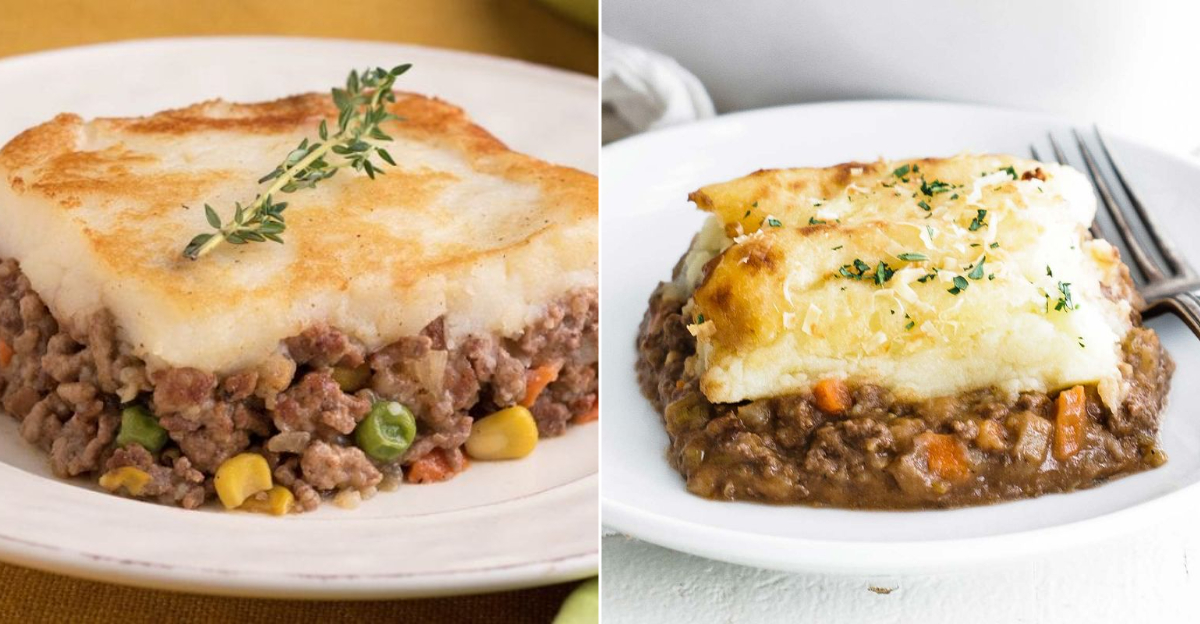 The Key Differences Between Cottage Pie And Shepherd’s Pie
The Historical Meat Mystery
Here’s a fun fact that will win you a bar bet: Cottage pie is older than shepherd’s pie. The first known recipe for cottage pie appeared in a 1791 cookbook, back when people were still wearing powdered wigs and dying of gout. Shepherd’s pie didn’t show up until the 1850s, probably because someone looked at a cottage pie and said, “What if this had sheep in it?” And thus, a culinary spin-off was born. It’s basically the Better Call Saul of comfort foods.
Another shocking fact: during the Great Depression, creative cooks would make mock shepherd’s pie using lentils. That’s right—they took a beef pie, called it a shepherd’s pie, and then used beans. It was a triple threat of confusion. Today, you can find vegan versions made with mushrooms and walnuts, and people still argue about the name. I say if it’s made from plants, it’s a Gardener’s Pie, and you can fight me in the parking lot.
How to Order Without Looking Like a Fool
So you’re at a restaurant. The menu says “Shepherd’s Pie.” Ask yourself: “Do I see lamb?” If the answer is no, you have the right to send it back and demand a conversation with the chef. But don’t be that person. Just smile, eat the beef, and mutter under your breath, “Ah, a cottage pie. How charmingly rustic.” You’ll look like a food historian, and your date will be impressed.
 Difference Between Shepherd’s Pie and Cottage Pie | Difference Between
If you’re making this at home, remember the golden rule: lamb for shepherd, beef for cottage, and turkey for nobody (because turkey pie is a war crime). And please, for the love of gravy, don’t put peas in the shepherd’s pie. That’s a controversial take, I know, but peas are for spring, not for a hearty winter pie. Use carrots, onions, and maybe a little Worcestershire sauce for a kick. If you add peas, you’re basically making a pot pie, and that’s a whole other argument.
The Final Forkful
At the end of the day, the difference between cottage and shepherd’s pie is a single ingredient—the meat—but the cultural weight is enormous. Order the wrong one and you’ll get a lecture from a British uncle who owns a tweed jacket. But here’s the surprising part: you can swap them and nobody really dies. The universe does not explode if you put beef under mash. It’s just that your ancestors in spirit form might give you the side-eye.
So go forth, eat pie, and remember this: if it’s from a cow, it’s a cottage. If it’s from a sheep, it’s a shepherd. If it’s from a goat, you’re a legend and I want your recipe. And if you see someone eating a “Vegan Shepherd’s Pie,” just nod politely and whisper, “That’s a Garden Pie.” Then run before they correct you. Now excuse me, I have to go argue with a waiter about a beef pie that’s been mislabeled. Wish me luck.
