Candle Wick Mushrooming Carbon Buildup Incomplete Combustion Wick Length Source

Ever lit a candle and noticed something weird happening to the wick? Like it's growing a little... mushroom? Or maybe it's turning black and crusty, even though you've only ju...
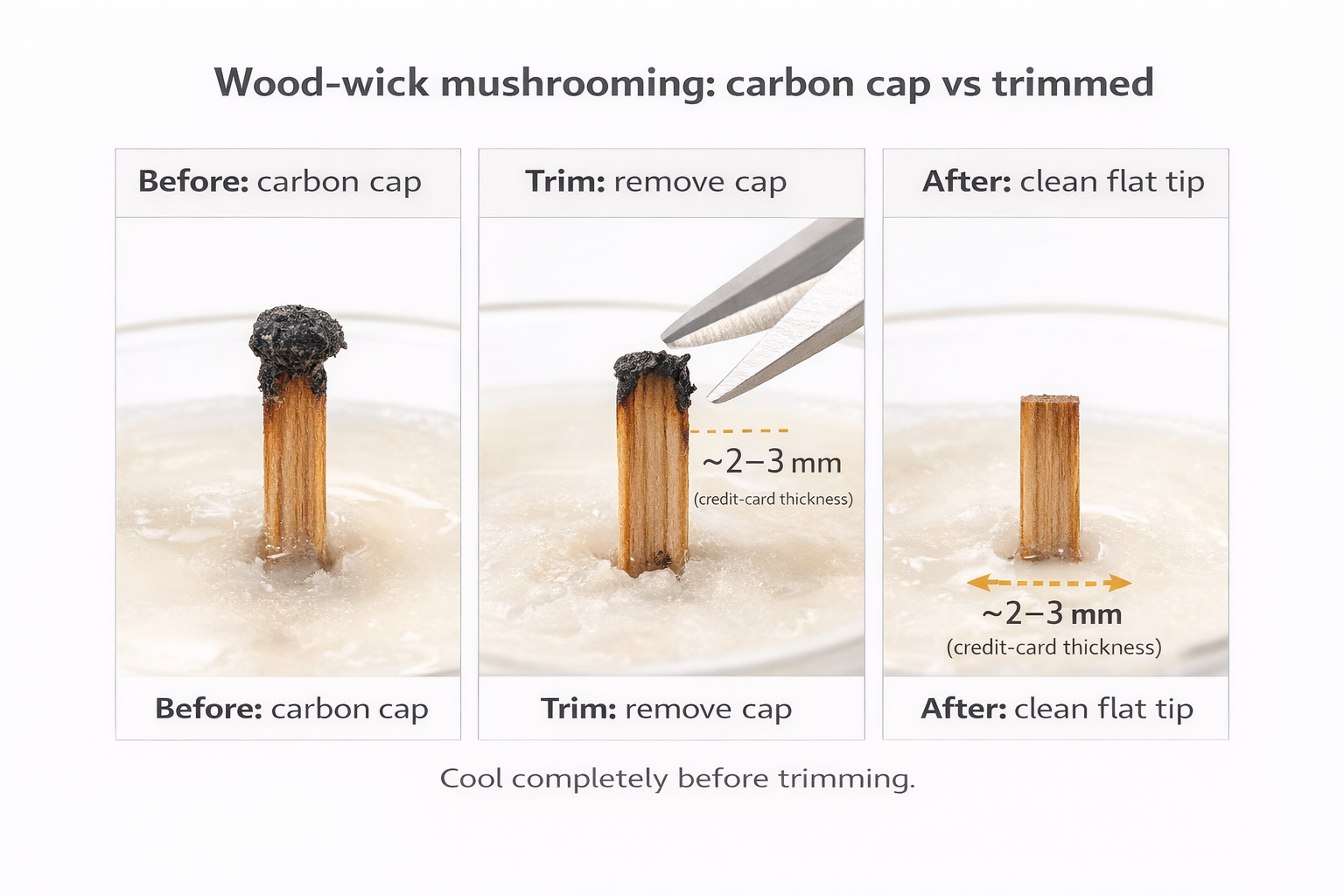
Ever lit a candle and noticed something weird happening to the wick? Like it's growing a little... mushroom? Or maybe it's turning black and crusty, even though you've only just lit it? Don't worry, you're not alone, and no, your candle isn't turning into a tiny, waxy toadstool farm. Let's dive into this fascinating phenomenon, shall we?
What's Going On Here?
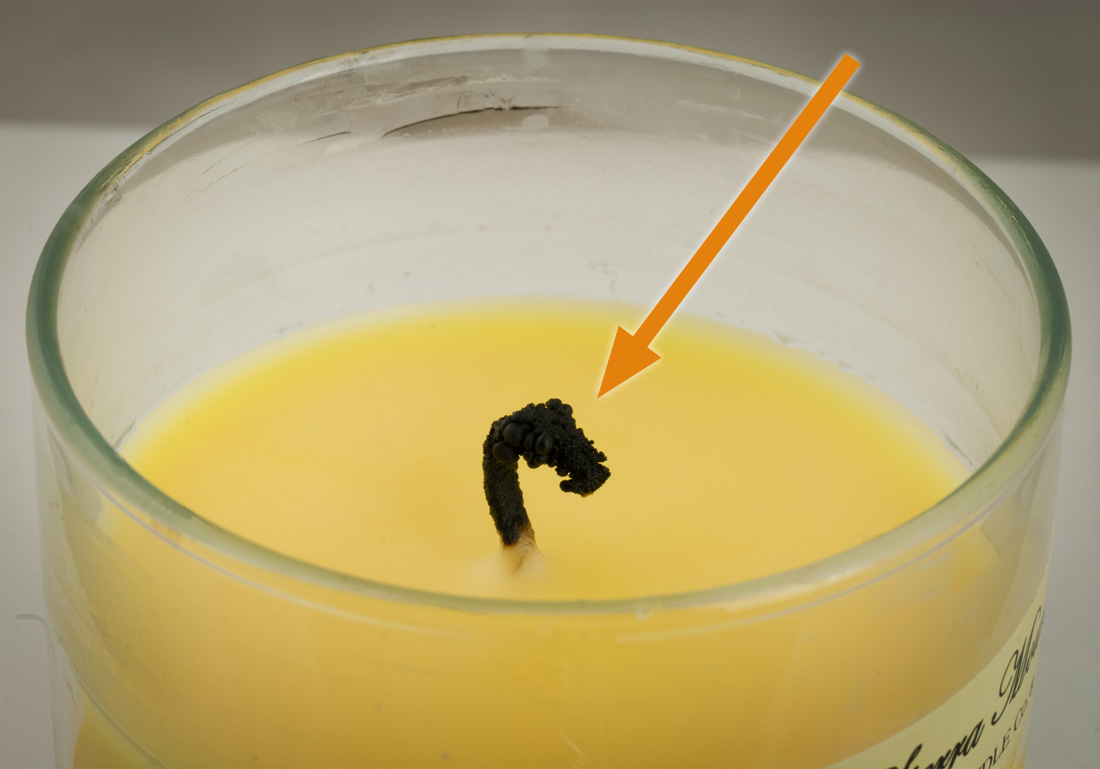
So, you've got a candle burning, and suddenly, you notice this little 'mushroom' cap forming on the wick. It's like nature's trying to give your candle a tiny, waxy hat. What's happening here is a process called carbon buildup, and it's all about incomplete combustion.
Incomplete Combustion: The Party Crasher
You might be thinking, "But I lit my candle! It should be burning, not building up weird stuff." Well, here's the thing: candles aren't perfect little combustion engines. Sometimes, the wick doesn't get enough oxygen to burn all the fuel (in this case, wax) completely. When that happens, we get carbon buildup, or soot, just like in a dirty fireplace or a poorly maintained car engine.
Must Read
Imagine you're at a party (yes, we're going there). You've got a big bowl of chips, but there's not enough room for everyone to reach in and grab some. Some chips are left behind, untouched, right? That's kind of what's happening with the wax. Not all of it gets 'burned' (or eaten, in our chip analogy), so it builds up on the wick instead.
Why Does This Happen?
Wick Length: The Guest List
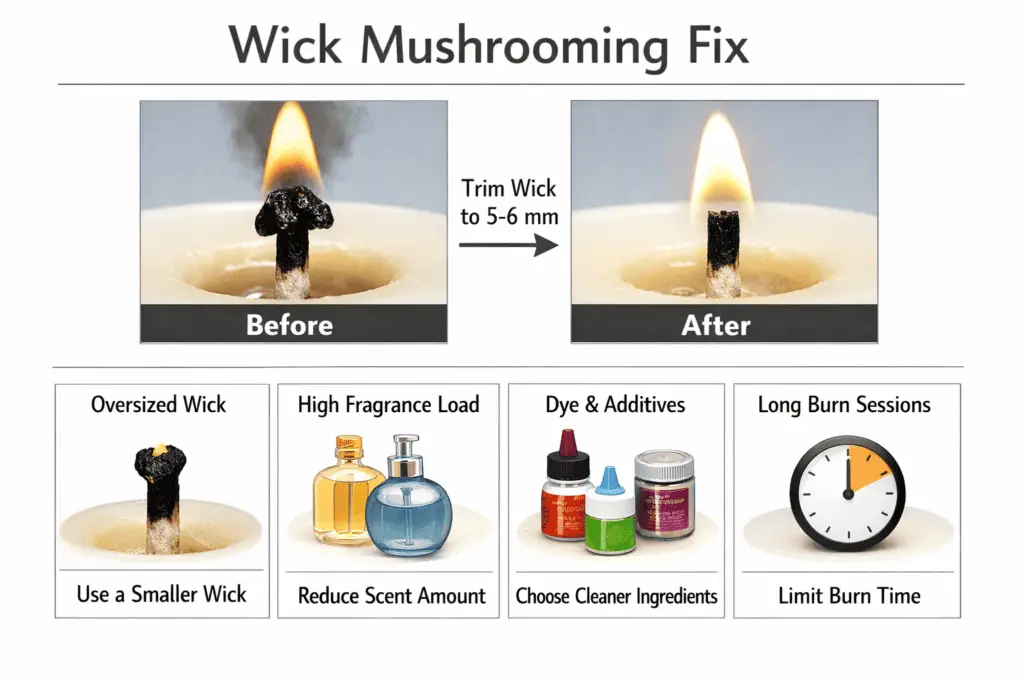
One of the main reasons for carbon buildup is the length of the wick. Think of it like the guest list for our party. If you invite too many people (make the wick too long), not everyone can enjoy the food (oxygen can't reach all the wax), and some guests will be left out in the cold (carbon buildup happens).
 How to Fix Common Issues with Decorative Candles (Fast, Visual Steps
On the other hand, if you don't invite enough people (make the wick too short), there won't be enough guests to enjoy the food (the flame won't be big enough to melt enough wax), and the party will be a flop (the candle won't burn properly). So, it's all about finding the right balance.
Other Culprits
Wick length isn't the only culprit. Drafts, like a window open on a breezy day, can mess with the party (the candle's combustion) too. They can blow out the flame or make it flicker, causing incomplete combustion. And let's not forget about the quality of the candle. If it's made with poor-quality wax or a wick that's not up to the task, it's like inviting your friends over for a fancy dinner, but serving them burned toast and cold coffee. They're not going to enjoy it, and neither is your candle.
What Can You Do?
So, how can you prevent this waxy mushroom cap from forming? Well, you could try trimming your candle's wick. Just like trimming the guest list to make sure everyone can enjoy the food, trimming the wick helps ensure that oxygen can reach all the wax, preventing carbon buildup.
 Why Does My Wick Keep Mushrooming at Becky Hansen blog
You could also try moving your candle to a more protected spot, away from drafts. It's like moving the party to a cozy, enclosed space where everyone can enjoy themselves without any disruptions. And of course, using good-quality candles can make a big difference too. It's like inviting your friends over for a fancy dinner and actually serving them something delicious.
But hey, if you don't mind the waxy mushroom cap, why not embrace it? It's like a tiny, natural sculpture forming right on your candle. Just remember, if it starts to smoke or the flame gets too big, it's time to trim that wick or blow out the candle for safety's sake.
So there you have it, folks. The mysterious world of candle wick mushrooming, explained. Next time you see that little waxy cap forming, you'll know exactly what's going on. And who knows? Maybe you'll even start looking forward to it. After all, it's just another fascinating aspect of the world around us.
