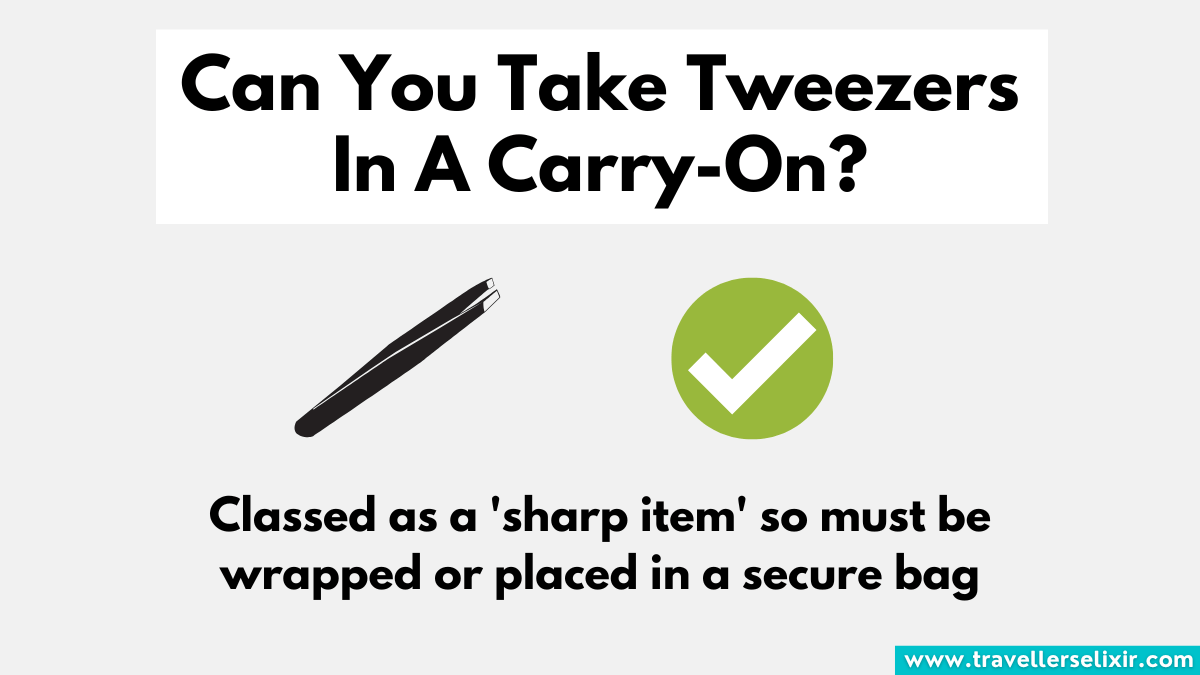
Can You Take Tweezers On A Plane

Welcome to the surprisingly thrilling world of travel grooming—where a simple question like “Can you take tweezers on a plane?” can make you feel like you’re solving a tiny, h...
Welcome to the surprisingly thrilling world of travel grooming—where a simple question like “Can you take tweezers on a plane?” can make you feel like you’re solving a tiny, high-stakes puzzle. Whether you’re a last-minute lash-plucker, an emergency splinter-remover, or a travel-sized beauty enthusiast, knowing the rules about tweezers on a flight is genuinely helpful. It saves you from that awkward moment at security where a TSA agent peers at your carry-on like it’s a crime scene. Plus, it means you can keep your brows perfectly arched for that in-flight selfie without fear of confiscation. So, buckle up—we’re about to dissect this sharp little topic with a side of practicality and a sprinkle of fun.
First, the good news: yes, tweezers are generally allowed in carry-on luggage in the United States, as per the TSA (Transportation Security Administration). They’re not classified as weapons like box cutters or knives. The rule is simple: if your tweezers are under 6 inches in length and don’t have a locking blade, you’re golden. The purpose is clear—tweezers are considered a personal grooming tool, like a nail file (though the latter is also fine, thanks to no sharp edges). The advantage? You can keep your eyebrow game strong during a layover in Atlanta, or remove a stray cat hair from your sweater before a business meeting in Chicago. For international flights, the rules are similar, but always check your destination’s aviation authority—Europe’s EASA and the UK’s CAA also allow tweezers, but always verify country-specific bans (e.g., on flights to Saudi Arabia, tweezers are fine, but some razor-like tools aren’t).
Now, let’s get creative. Ever thought of using tweezers mid-flight for something beyond eyebrows? Imagine you’re on a long-haul to Tokyo, and your in-flight meal includes a clingy plastic wrapper. Your tweezers become a precision tool—perfect for peeling off that stubborn foil without ripping your manicure. Or picture this: a fellow passenger’s necklace clasp is stuck, and you step in with your trusty tweezers to perform a heroic, non-invasive rescue. Yes, you can be the superhero of seat 14F. For photographers, tweezers even help remove dust from camera lenses or adjust tiny tripod screws. The point is, tweezers are multipurpose travel companions—not just for grooming, but for tiny fixes that make your journey smoother. Just don’t try to open a wine bottle with them; that’s a job for the flight attendant.
Must Read
Here’s a pro tip: pack your tweezers in an obvious place, like your toiletry bag or a clear plastic pouch. Why? Because even though they’re allowed, a TSA agent might ask to inspect them if they’re bundled with something metal. Avoid the “confiscation scare” by keeping them visible. Another trick: choose slant-tip tweezers over pointy ones. Slant tips are less likely to be mistaken for a potential weapon, and they’re better for shaping brows anyway. If you’re nervous, take a picture of the TSA’s “What Can I Bring?” page on your phone—it’s a quick reference that can calm your nerves. And remember: tweezers are not prohibited in checked bags, so if you’re really worried, just toss them in your suitcase. But where’s the fun in that? Half the joy is knowing you’ve got a tiny, legal tool in your pocket for any eyebrow emergency.
What about the “what if” scenarios? Say you’re carrying a multi-tool that includes tweezers, like a Swiss Army knife. Here’s the catch: if the tool also has a blade over 6 cm (approx. 2.4 inches), it’s a no-go in carry-on. But if the tweezers are the only metal part (e.g., a plastic-handled tweezer tool), you’re fine. For cosmetic tweezers with sharp tips, like those used for precision eyelash work, they’re still allowed—just don’t brandish them dramatically near the security line. One traveler I know once had her tweezers singled out for extra screening. The agent simply asked, “What are these for?” She replied, “Brows, officer. The disaster that is my unibrow.” The agent laughed and let them through. Lesson: be friendly and confident—you’re not smuggling contraband; you’re wielding a grooming tool with pride.
 Airport Tweezers: Manchester's Security Rules Explained | ShunHotel
Let’s talk international quirks. In Australia, tweezers are permitted in carry-on, but must be blunt-tipped—so leave your super-sharp surgical tweezers at home. The UK’s government website explicitly lists tweezers as “allowed” in hand luggage. However, in China, security might ask you to store them in your checked bag if they look overly aggressive. Always check the local authority’s website before flying to destinations like Japan, where the rules are identical to the US but enforcement can be stricter. A clever workaround? Buy a travel-sized tweezer set at a duty-free shop after security—they’re cheap, tiny, and guarantee no hassle. Or, pack a pair of plastic tweezers (yes, they exist!) for really sensitive routines. The key is preparation: know your airport, know your tool, and you’ll never have to choose between perfect brows and boarding.
Finally, a quick checklist for the overthinker: #1: Check the length—under 6 inches? Good. #2: No locking or folding blades—if your tweezers are part of a knife, separate them. #3: Store in a Ziploc bag with your other liquids and gels (even though they aren’t liquid, it keeps them visible). #4: Consider the shape—fancy, angled tweezers are less intimidating than straight ones. #5: Pack a backup in your checked bag just in case. The bottom line? You can absolutely take tweezers on a plane, and you should. They’re a small, legal, and incredibly handy tool that turns a travel grooming moment from frantic to fabulous. So go ahead, stuff them in your carry-on, and enjoy the journey with brows (and a tool) that are perfectly arched for adventure.