Can You Substitute Vegetable Oil For Shortening

Let’s be real for a second: shortening is that mysterious white block in your pantry that looks like it moonlights as a candle. It’s a baking staple, but the moment you run ou...
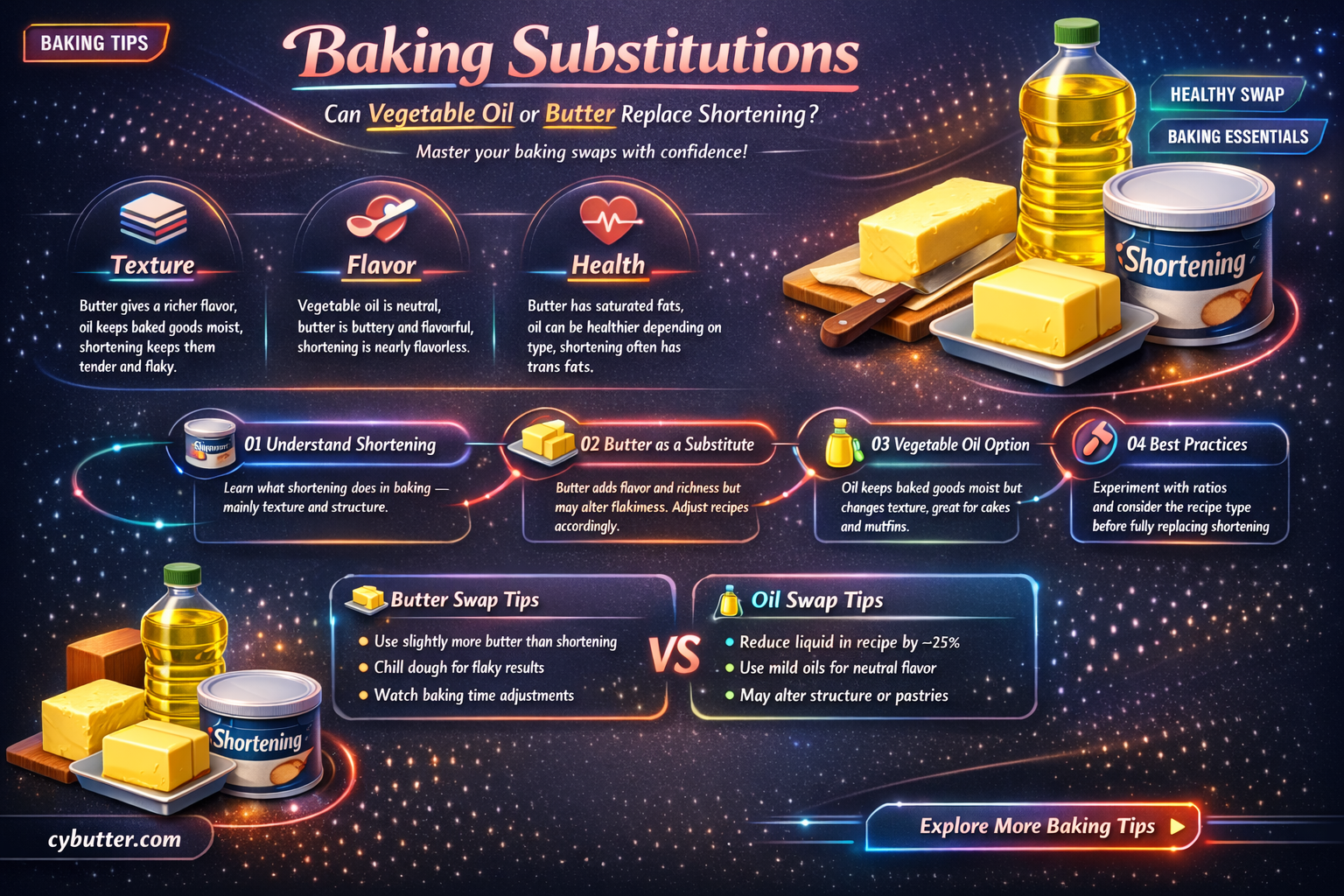
Let’s be real for a second: shortening is that mysterious white block in your pantry that looks like it moonlights as a candle. It’s a baking staple, but the moment you run out, panic sets in. You glance over at the bottle of vegetable oil, and a tiny, hopeful voice whispers, “Can I… just swap them?” Oh, honey, let’s pour a cup of tea and talk this out—because the answer is “yes, but with a wink and a few caveats.”
Think of shortening and vegetable oil as distant cousins at a family reunion. They’re both 100% fat, which is great for keeping your baked goods tender, but shortening is solid at room temperature (which is why it creates those gloriously flaky pie crusts and soft, pillowy cookies). Oil, on the other hand, is a liquid—a free-spirited rebel that doesn’t like to hold its shape. So, when you substitute, you’re basically asking a puddle to act like a brick. Spoiler alert: it won’t be perfect, but it can be deliciously close.
Here’s the golden rule: For every 1 cup of shortening, use ¾ cup of vegetable oil. Why? Because shortening is solid fat that has more fat per cup than liquid oil (thanks to air bubbles trapped inside). If you swap them one-for-one, your brownies might turn into a greasy slip-and-slide. So, trust the math—it’s your baking BFF. And for the love of all things fluffy, never try this swap in recipes that rely on creaming butter or shortening with sugar (like classic chocolate chip cookies). The magic of creaming is trapping air, and oil just can’t do that. You’ll end up with cookie pucks—and nobody wants a hockey puck with chocolate chips.
Must Read
But where does oil shine? Oh, my friend, you are in for a treat. Quick breads (think banana, zucchini, or pumpkin) love oil. It makes them unbelievably moist and tender, and they stay that way for days. Brownies? A glorious swap. Oil gives you that fudgy, crackly-top texture that makes people swoon. And muffins? Yes—oil creates a soft, bakery-style crumb that feels like a hug. Just be warned: your baked goods will be a tad more dense and won’t have that flaky, shattering quality. But sometimes dense is cozy, right?
:max_bytes(150000):strip_icc()/substitute-shortening-for-butter-995116-ADD-FINAL-V2-b9976578e7fa47939604d3f48148de7c.png) Can You Substitute Shortening With Vegetable Oil at Laura McDonald blog
Can You Substitute Shortening With Vegetable Oil at Laura McDonald blog
Now, a little pro tip from your kitchen fairy godmother: if you replace shortening with oil, add a tiny pinch more leavening (like baking powder or soda). Oil doesn’t hold air like solid fat, so giving your batter a little extra oomph helps it rise. Also, remember that oil adds moisture, but it can also make things heavier. So, if you’re baking a cake that needs to be light and airy (like a classic yellow birthday cake), maybe stick with the shortening. “But what about pie crust?” you ask. Darling, don’t. Just don’t. Pie crust with oil is a sad, crumbly mess—like trying to build a sandcastle with wet spaghetti. Use cold butter for that, okay?
The bottom line? You can absolutely substitute vegetable oil for shortening in most moist, tender recipes (think muffins, brownies, and banana bread). For cookies and pie crusts? Hold the line and make a trip to the store. But here’s the uplifting truth: baking is not about perfection—it’s about joy. So if your cookies are a little flat, laugh about it. If your muffins are extra moist, call them “luxurious.” You are expanding your kitchen knowledge, being brave, and saving yourself a trip to the store in your pajamas. And that, my friend, is the sweetest win of all. So go ahead, grab that bottle of oil, and bake something wonderfully imperfect. You’ve got this—and you’ll still end up with something delicious. Probably. Definitely. 😉
:strip_icc()/Butter-substitute_color-10ac0c30b49c4c07aaed45395e741599.jpg)
