Can You Substitute Light Cream For Heavy Cream

Welcome to the wonderfully wobbly world of dairy substitutions, where a simple swap in your fridge can either save your dessert or send it into a tailspin of sadness. Today, w...
:max_bytes(150000):strip_icc()/heavy-cream-substitute-4154289_round2-db6506af6bc74b46bc38bb1adf360285.png)
Welcome to the wonderfully wobbly world of dairy substitutions, where a simple swap in your fridge can either save your dessert or send it into a tailspin of sadness. Today, we’re tackling a question that has stumped many a home cook and baker: Can you substitute light cream for heavy cream? The short answer is yes, but like all great kitchen adventures, the devil (and the delight) is in the details. This topic is incredibly helpful because it speaks to the practical reality of our pantries—you’re mid-recipe, you realize you’re out of heavy cream, and you spot that carton of light cream staring back at you. Understanding this substitution means less food waste, fewer frantic trips to the store, and more confidence to adapt recipes on the fly. Let’s dive into the creamy, dreamy details.
First, let’s get to know our two stars. Heavy cream, also called heavy whipping cream, contains a glorious 36–40% milkfat. This high fat content is what allows it to whip into stiff peaks, thicken sauces without curdling, and add a luxuriously rich body to soups, ice creams, and ganaches. Light cream, on the other hand, clocks in at a more modest 18–30% milkfat—sometimes labeled “coffee cream” or “table cream.” While it’s still wonderfully smooth and decadent, it simply doesn’t have the structural integrity of its heavier cousin. The purpose of this substitution is not to create an identical outcome, but to achieve a similar effect in dishes where texture and richness are important, without requiring a specialized ingredient. The advantage? You’ll save money and shelf space, and you’ll learn how to work creatively with what you have.
Here is the golden rule for substitution: Use light cream in cooked or stirred applications, but avoid it in recipes that require whipping. For example, if you’re making a creamy Alfredo sauce, a velvety mushroom soup, or a simple stovetop pasta bake, light cream works beautifully. Because these dishes rely on gentle heat and stirring, the lower fat content won’t leave you disappointed. Try adding a splash of light cream to your scrambled eggs for an unexpectedly silky finish, or pour it into your morning coffee for a smoother, less cloying taste than heavy cream. I once used light cream to make a quick, no-bake chocolate pudding—I simply melted dark chocolate into warmed light cream, added a pinch of salt, and let it set. The result was a lighter, almost mousse-like dessert that was surprisingly satisfying.
Must Read
The landscape gets trickier when it comes to baking, but there are clever workarounds. For pies, quiches, and cheesecakes, you can substitute light cream for heavy cream provided you make a slight adjustment. Because light cream has less fat, it contributes less structure and moisture resistance. A great tip is to add one tablespoon of melted butter per cup of light cream to boost the fat content closer to heavy cream’s level. This works beautifully in custards and fillings, where the butter adds stability without altering the flavor. Conversely, for recipes like scones or biscuits that call for heavy cream to be folded in for tenderness, light cream can be used straight-up—you’ll just get a slightly less rich, more cake-like texture. I once made a batch of cream scones using light cream and a splash of melted butter, and my breakfast guests couldn’t tell the difference. The key is to always taste and adjust—if the batter or dough looks a bit loose, add a tablespoon of flour.
Now, let’s talk about what you absolutely should not do. Never try to whip light cream into stiff peaks for a meringue-topped pie or a cloud of whipped cream for hot cocoa. The fat content is too low to trap air bubbles, so you’ll end up with a sad, watery mess. If you’re desperate for whipped cream, you can try adding a stabilizing agent like gelatin or a tablespoon of powdered sugar mixed with a little cornstarch, but the results are still far from perfection. For that reason, my advice is to save your light cream for cooking and buy heavy cream when the recipe demands a whipped garnish. Another practical tip: because light cream has a higher water content than heavy cream, it can separate more easily when boiled or simmered for too long. To prevent curdling, always add light cream at the end of cooking, over low heat, and stir gently. If you’re making a tomato-based sauce, temper the cream first by whisking a few spoonfuls of hot sauce into the cream before adding it back to the pot.
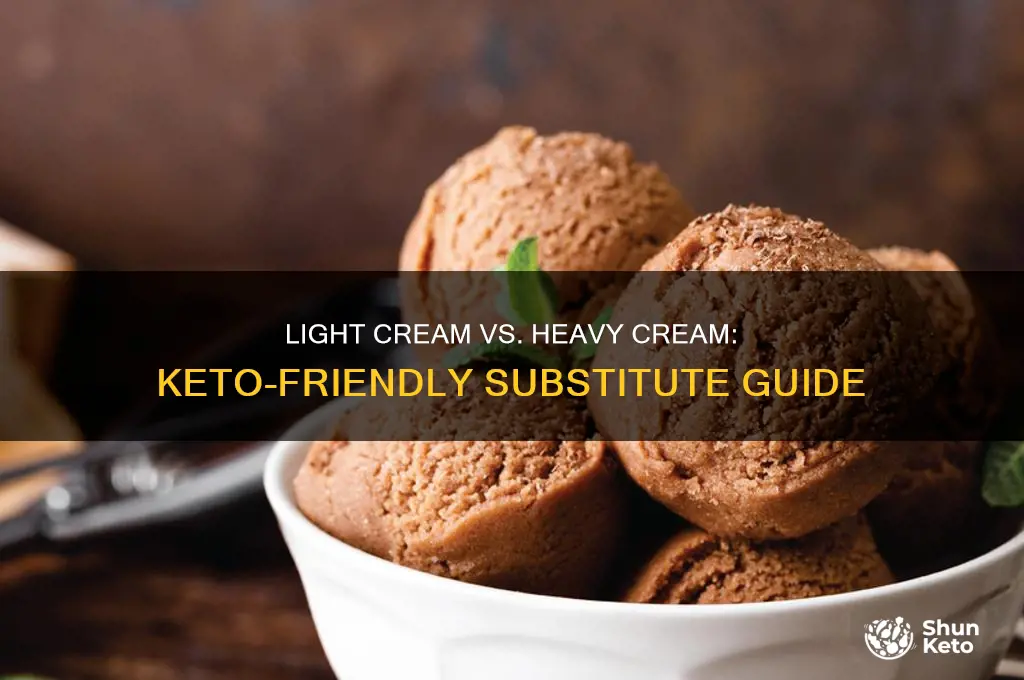 Light Cream Vs. Heavy Cream: Keto-Friendly Substitute Guide | ShunKeto
For the truly adventurous cook, light cream can become a surprising star in its own right. Consider using it to make lighter ice cream bases (perfect for fruit sorbets or fresh herb flavors), a quick “creamy” salad dressing by emulsifying lemon juice and olive oil into it, or even as a base for a simple, silky scrambled tofu for a vegan-leaning breakfast. Another creative idea: chill a can of light cream (not ultra-pasteurized, if possible) and use it as a pour-over cream for fruit crumbles or bread puddings—it adds richness without overwhelming the dish’s other flavors. Experiment, take notes, and don’t be afraid to fail—a failed substitution often teaches you more about the chemistry of cooking than a perfect one ever will.
Ultimately, no, light cream is not a perfect one-to-one swap for heavy cream, but it is a valuable and versatile stand-in in many everyday recipes. The advantages are clear: you avoid a last-minute grocery trip, you reduce food waste, and you train your palate to understand how fat content changes a dish. My final piece of advice is to know your recipe’s goal before making the switch. If you need structure and loft, reach for the heavy stuff. If you need gentle creaminess and ease, light cream is your friend. Keep a carton of each in your fridge, and you’ll always be ready to adapt. So go ahead—open the fridge, grab that light cream, and make something delicious. You’ve got this, and your taste buds will thank you.
:max_bytes(150000):strip_icc()/heavy-cream-substitute-4154289_round2-db6506af6bc74b46bc38bb1adf360285.png&description=Can+You+Substitute+Light+Cream+For+Heavy+Cream)