Can You Substitute Cornstarch For Baking Powder

So, you’re staring into your pantry, wondering if you can swap cornstarch for baking powder. Maybe you’re halfway through a muffin recipe and realize you’re out of the fluffy...

So, you’re staring into your pantry, wondering if you can swap cornstarch for baking powder. Maybe you’re halfway through a muffin recipe and realize you’re out of the fluffy stuff. It’s a moment of pure kitchen panic, right?
Let’s chill out and break this down. Cornstarch and baking powder might look like twins in their little boxes, but they’re total opposites in the science department. Think of cornstarch as a quiet librarian—it thickens sauces and puddings without making a peep.
Baking powder, on the other hand, is the party animal of the baking world. It releases gas when it gets wet or hot, creating bubbles that make your cakes, cookies, and muffins rise. Without that fizz, your baked goods turn into dense, sad little hockey pucks.
Must Read
What happens if you try the swap?
Here’s the deal: you can’t substitute cornstarch for baking powder directly. One is a thickener, the other is a leavening agent—they have completely different jobs in your recipe. It’s like trying to use a bicycle pump to water your plants. Both are useful, but not for the same task.
If you swap them one-for-one, your batter will stay flat and heavy. No bubbles, no fluff, no happy rise. You’ll end up with a dense, gummy texture that feels more like a failed science experiment than a treat.
But wait—can you fake it?
Now, here’s where it gets interesting. You can combine cornstarch with other ingredients to kind of mimic baking powder. Baking powder is basically baking soda plus an acid (like cream of tartar) and a little cornstarch to keep it dry. So if you have cornstarch and baking soda, you’re halfway there.
Try mixing 1 part baking soda with 2 parts cream of tartar and 1 part cornstarch. Boom—you’ve just made your own baking powder. It’s like being a mad scientist in your kitchen, but way more delicious.
Without cream of tartar? Use lemon juice or buttermilk as the acid, but you’ll need to adjust your recipe. It’s a bit of a dance, but totally doable if you’re feeling adventurous.
The real magic: thickening vs. rising
Let’s get nerdy for a second. Cornstarch is a carbohydrate chain that grabs water and swells up, making your gravy silky or your pie filling glossy. Baking powder, however, is a chemical reaction waiting to happen—it’s sodium bicarbonate plus a dry acid (usually cream of tartar) that react when wet.
Imagine cornstarch as a sponge that soaks up liquid to change texture. Baking powder is like a firecracker that creates air pockets for lightness. They’re from two different worlds, and mixing them up can lead to kitchen chaos.
Here’s a fun comparison: if your recipe calls for baking powder, you’re basically asking for a cloud. Cornstarch, on the other hand, asks for a river—something smooth and flowing. You wouldn’t ask a cloud to thicken your soup, right?
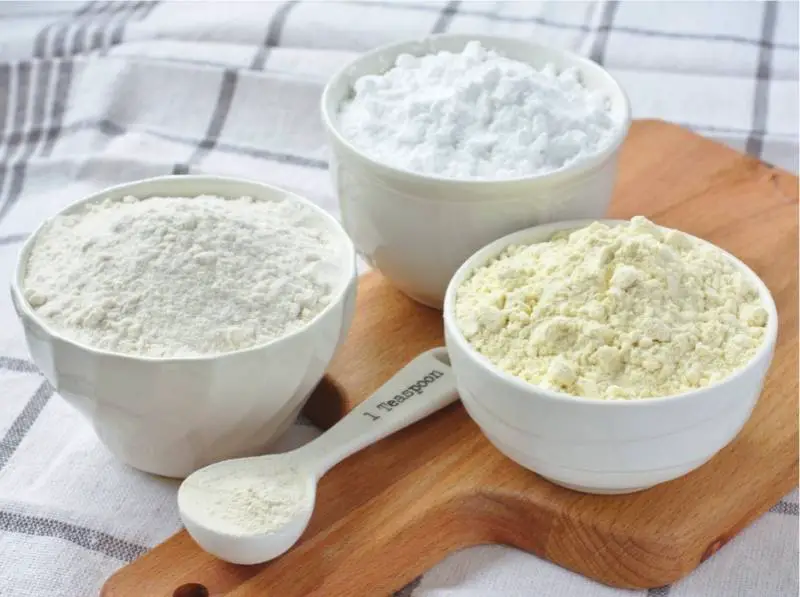 Can Baking Powder Replace Cornstarch? Substitutes That Work – Baking
When to use each one (the cheat sheet)
Use cornstarch when you want a velvety texture: stir-fries, puddings, pie fillings, or even as a coating for crispy fried chicken. It’s your secret weapon for smooth, glossy sauces without lumps.
Use baking powder when you want lift and fluff: pancakes, muffins, cakes, scones, and quick breads. It gives your baked goods that dreamy, airy crumb that makes them irresistible.
And if you ever mix them up, don’t worry—you’ll just get a unique texture. Maybe you’ll invent a new kind of pancake? Accidental genius happens sometimes.
What about that weird “taste” you might notice?
Here’s a pro tip: cornstarch tastes neutral when cooked, but raw cornstarch can feel chalky. Baking powder, if you use too much, leaves a bitter, metallic aftertaste. If you swap them incorrectly, you might end up with a soapy flavor in your baked goods—yikes.
That’s why following the recipe matters, but experimenting is cool too. Just start with small batches. No one wants a whole tray of metallic-tasting cookies.
The final verdict
Can you substitute cornstarch for baking powder? No, not directly—they’re different tools for different jobs. But can you use cornstarch as a part of a homemade baking powder mix? Yes, absolutely. It’s like using a wrench to build a shelf instead of a hammer—you can make it work, but you’ll need extra tricks.
So next time you’re in a pinch, don’t panic. Check your pantry for baking soda and cream of tartar, and use that cornstarch as the final piece of the puzzle. Your muffins will thank you.
And hey, if all else fails, just make a really good pudding with that cornstarch instead. Some problems have delicious solutions.
