Can You Replace Chicken Broth With Chicken Stock

Let’s face it—chicken broth and chicken stock are the unsung heroes of the kitchen, popping up in everything from soups and stews to risottos and holiday gravies. But here’s t...

Let’s face it—chicken broth and chicken stock are the unsung heroes of the kitchen, popping up in everything from soups and stews to risottos and holiday gravies. But here’s the million-dollar question: can you just swap one for the other without ruining your meal? The short answer is yes, mostly, and understanding why matters more than you think. For home cooks, busy families, and even community potlucks, this simple substitution can save a trip to the store, stretch your budget, and keep dinner on the table without the stress. It’s not just about convenience—it’s about confidence in the kitchen.
Why does this even matter? Because flavor and texture are the backbone of any great dish. Broth is typically made from meat (often with bones) and vegetables, simmered for a shorter time, giving it a lighter, more delicate taste—perfect for sipping or clear soups. Stock, on the other hand, is all about bones and collagen, cooked low and slow for hours to create a rich, gelatinous base that adds body and depth to sauces and braises. For individuals who meal-prep on a tight schedule, swapping stock for broth can accidentally thicken a soup too much, or using broth instead of stock might leave a stew tasting thin. But honestly? In most everyday meals, the difference is so subtle that nobody notices—especially when you’re feeding a hungry family or bringing a dish to a community gathering.
Take real-life example: Maria, a single mom of two, always keeps chicken stock in her pantry for her famous chicken and dumplings. One busy Tuesday, she ran out and used leftover broth from a rotisserie chicken—dinner was a hit. The kids didn’t miss the extra richness, and she saved herself a late-night store run. Or consider the neighborhood block party where everyone brings a soup. One neighbor used stock, another used broth, and both were devoured because the real magic came from shared laughter and good company. In these moments, the swap isn’t just acceptable—it’s practical and community-building.
Must Read
For the health-conscious home cook, the choice can also matter. Broth tends to be lower in calories and sodium, making it a better fit for individuals watching their intake or managing high blood pressure in the family. Stock, with its collagen and gelatin, is often praised for gut health and joint support—especially popular in older adult communities. If you’re cooking for a group with diverse needs, you can easily adjust by diluting stock with water for a lighter base, or adding a bouillon cube to broth for more depth. That flexibility is golden when you’re trying to please everyone at the table.
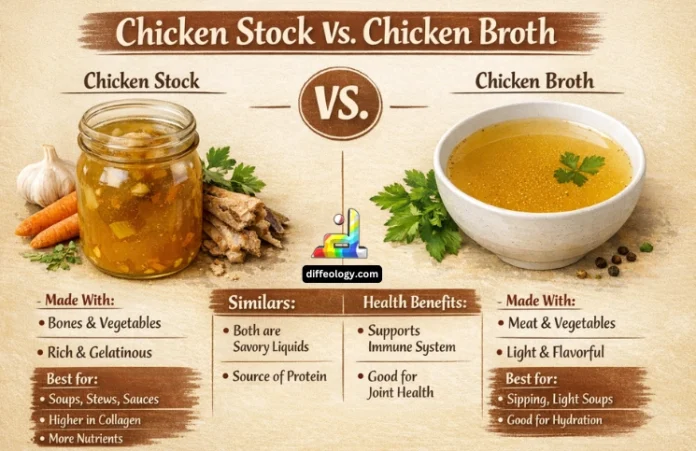 Difference Between Chicken Stock And Chicken Broth | Diffeology
Here are some practical suggestions to make the swap work every time. First, if you’re using broth in place of stock, add a splash of unflavored gelatin or a crushed bouillon cube to boost body and savoriness—this mimics stock’s richness. Second, when subbing stock for broth, just dilute it with water (equal parts stock to water) to avoid an overly intense flavor or gluey texture in light soups. Third, for sauces or gravies, stock is your best bet to get that silky mouthfeel, but broth works if you thicken it with a roux or cornstarch. Finally, always taste and season at the end—both broth and stock can vary in saltiness, so adjust gradually to avoid a salty disaster for your family or guests.
In the end, the stock vs. broth debate is less about rules and more about intention. If you’re crafting a restaurant-worthy consommé or a traditional pho, sure, pick the right one. But for a cozy Wednesday night dinner, a hurried family meal, or a festive community chili cook-off, don’t sweat it. The swap works because the heart of cooking isn’t precision—it’s resourcefulness, generosity, and sharing good food. So go ahead, use whatever you have in your fridge. Your soup will still be warm, your sauce will still be tasty, and your loved ones will still feel cared for. That’s the real recipe that nobody can replace.