Can You Eat The Leaves Of Brussel Sprouts

Let’s be honest for a second. When you buy Brussels sprouts, what do you do? You toss the little green gems into a bowl, and you eye that big, leafy stalk attached to them lik...
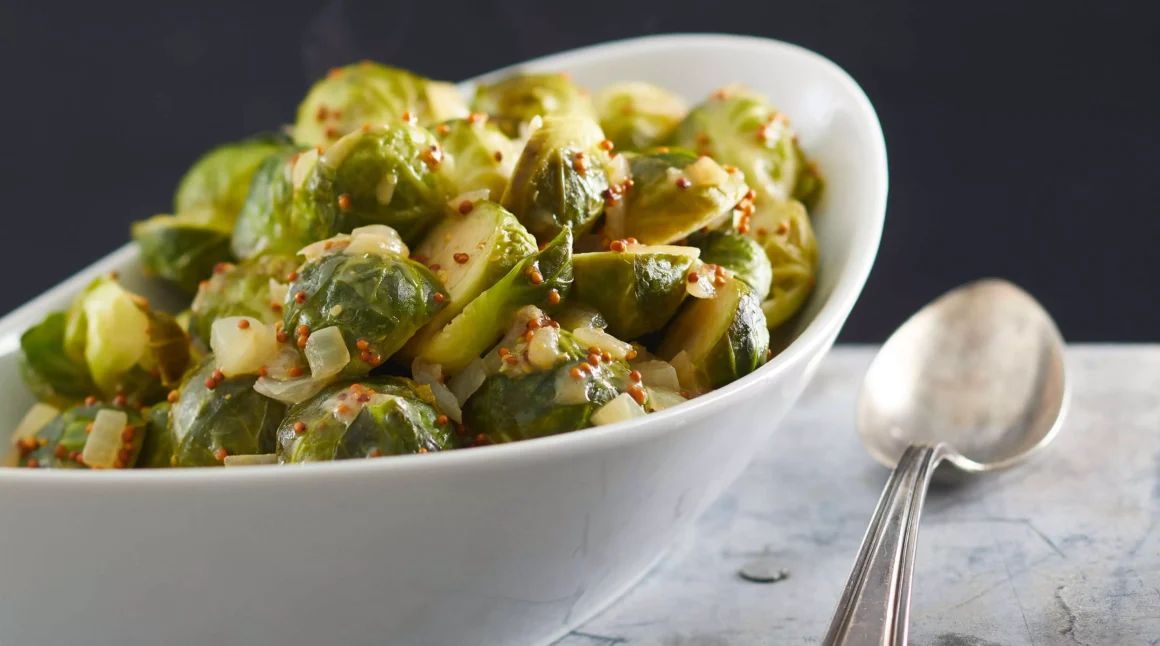
Let’s be honest for a second. When you buy Brussels sprouts, what do you do? You toss the little green gems into a bowl, and you eye that big, leafy stalk attached to them like it’s some kind of alien antenna. Then you snap the sprouts off, and you chuck the rest in the compost bin. I used to do the exact same thing. But here’s the secret nobody tells you: you can absolutely eat those leaves, and they are surprisingly delicious.
Think about it. They are just smaller, more delicate cousins of the sprouts you already love (or are learning to love). If you’ve ever eaten kale or collard greens, you’ve already made friends with this family. They have a mild, slightly sweet, cabbage-y flavor, but without the intimidation factor of a giant head of cabbage. It’s like the Brussels sprout plant decided to give you a bonus gift.
Why you should stop throwing them away
Let’s talk about money for a second. Have you seen the price of a bag of pre-washed kale lately? It’s wild. Meanwhile, you are literally buying a vegetable that comes with a free side of greens attached. All that stalk foliage—the leaves that wrap up the stalk—are perfectly edible. You paid for them, so you might as well use them and stop tossing your hard-earned cash into the trash.
Must Read
Beyond the economics, there’s the fun factor. Imagine the smug satisfaction you feel when you roast a whole tray of these leaves and they turn into crispy, salty chips. You’ll set them on the table, and your family will go, “Whoa, what are these?” You get to casually say, “Oh, those? Just the leaves from my Brussels sprouts.” You become a kitchen wizard for zero extra effort.
How to actually eat them (it’s stupidly easy)
So you’ve got a stalk of Brussels sprouts. Don’t just snap the sprouts off. Instead, take your hands and gently pull the leaves off the stalk in the opposite direction of how they grow. They come off in big, beautiful, ruffly pieces. They look like little lettuce leaves from a fancy farmer’s market, but they’re usually tougher and more festive.
Wash them well, because dirt loves to hide in those folds. Then, treat them like you would any hearty green. My favorite trick? Toss them in olive oil, a pinch of salt, and a little garlic powder. Lay them out on a baking sheet in a single layer (don’t crowd them!). Pop them in a 375°F oven for about 12 to 15 minutes. Keep an eye on them—they go from perfect to burnt faster than you can say “Brussels.”
They come out crispy on the edges, tender in the middle, and totally addictive. It’s like having kale chips, but with a deeper, earthier flavor. If you mess up and overcook them, they still taste like a vaguely smoky, salty snack. It’s a forgiving mistake to make.
What about the big, tough outer leaves?
You know those floppy, dark green leaves that grow on the very outside of the stalk? The ones that look like they’ve been through a small storm? Don’t toss them either. Those are my secret weapon. They are tough, sure, but they are perfect for stocks and soups. Just give them a good rinse, throw them into a pot of simmering water with a bay leaf, some carrot ends, and an onion, and you’ve got a free vegetable stock base.
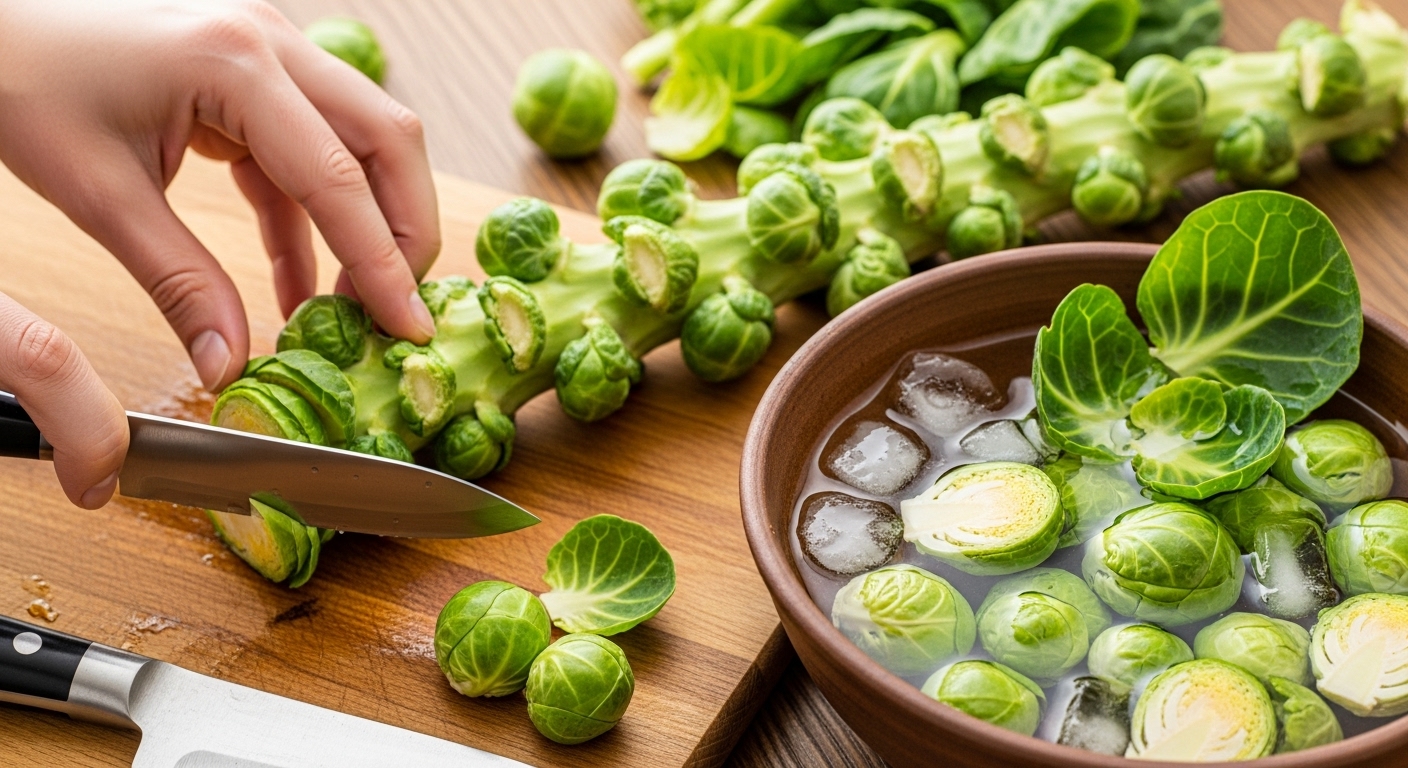 Are Brussels Sprouts Leaves Edible?
Alternatively, you can blanch them in boiling water for 30 seconds, then shock them in ice water. This softens them right up. Then, chop them finely and sauté them with garlic and lemon. They become a side dish that tastes like a fancy version of spinach. Seriously, you’ll start hunting for stalks with the biggest leaves at the grocery store.
A little story from my kitchen
I learned this lesson the hard way. Last Thanksgiving, I was prepping a huge tray of roasted sprouts. My mother-in-law looked at the pile of leaves I was about to toss and said, “Wait! Don’t throw those away. My grandmother used to fry those in bacon fat.” I stared at her. I had been a Brussels sprout snob for thirty years, and I had never known. That night, she made a quick sauté of the leaves with a little bacon and balsamic. They were devoured in minutes. I felt like such a dope.
Now, I can’t imagine not using them. It’s one of those small kitchen hacks that makes you feel like you’ve unlocked a cheat code. You get more food, more flavor, and less waste. And honestly, who doesn’t love feeling a little bit smug about their cooking?
The simple takeaway
So, can you eat the leaves of Brussels sprouts? Yes, absolutely, and you should. Don’t be a leaf-thrower any longer. Be a leaf-saver. Be the person who gets two meals out of one stalk. Your wallet will thank you, your taste buds will get a new crispy snack, and you’ll officially become the interesting person at the dinner party who “roasts the whole plant.”
Go on, grab a stalk this weekend. Give those leaves a chance. You might just discover your new favorite snack hiding in plain sight on the edge of your cutting board.
