Can You Cook Meatloaf At 400

So, you’re standing in your kitchen, a pound of ground beef staring back at you, and a sudden, rebellious thought pops into your head: “Can you cook meatloaf at 400?” I mean,...

So, you’re standing in your kitchen, a pound of ground beef staring back at you, and a sudden, rebellious thought pops into your head: “Can you cook meatloaf at 400?” I mean, everyone says 350. Mom says 350. Grandma says 350. The back of that dusty cookbook says 350. But you, my friend, are a trailblazer. A culinary maverick. A person who just really wants dinner on the table twenty minutes sooner.
Let’s cut to the chase: Yes, you absolutely can. But—and this is a crucial “but”—you can’t just toss your grandma’s recipe into a 400°F oven and expect a miracle. You need a little strategy, a pinch of science, and a willingness to embrace the crispy edges. Think of it this way: cooking at 350 is like a slow, cozy chat with an old friend. Cooking at 400 is like a high-energy pep rally in your oven. Both are fun, but one requires a little more oomph.
So, what happens to your beloved meatloaf at 400? First, the Maillard reaction (fancy chef talk for “brown, delicious crust”) kicks into overdrive. You get a glorious, caramelized outer shell that’s practically begging for a spoonful of extra ketchup glaze. Second, the cooking time plummets. Instead of a 60-minute commitment, you’re looking at about 35 to 45 minutes for a standard 2-pound loaf. That’s a game-changer for a busy Tuesday night, my friend. Who doesn’t love a faster meatloaf?
Must Read
But here’s where the pitfalls lurk. The higher heat can—and will—dry out the center if you’re not careful. Your meatloaf is basically a big, beefy sponge, and it loses moisture fast. So, you need to arm it. Add moisture like you’re bribing a security guard. Toss in an extra egg yolk. Pour in a splash of milk or beef broth. Grate a whole onion (or use a box grater—no one’s judging your tears). And for the love of all that is savory, don’t overmix. Mix it just until it comes together, like you’re petting a very anxious cat. Gently.
Shape is also your friend. Instead of a tall, majestic loaf mountain, go for a flatter, wider shape. Think of it as a meatloaf pancake—delicious, not dignified. A wider surface area means the heat hits more of the loaf evenly, so the inside cooks through before the outside turns into charcoal. Another pro tip: use a meat thermometer. Don’t guess! Pull it out when the center hits 160°F. Let it rest on the counter for 10 minutes, tented with foil. Those 10 minutes are not a suggestion; they are a mandatory meatloaf spa treatment. The juices reabsorb, and you avoid a dry, crumbly slice that needs a glass of water just to choke down.
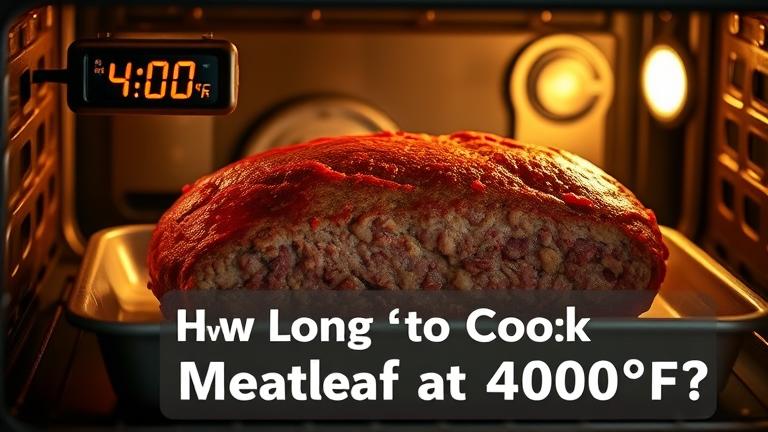 how long to cook a meatloaf at 400? - Test Food Kitchen
And what about the classic ketchup glaze? Bake your meatloaf uncovered for the first 25 minutes, then slather on that sweet, tangy layer for the final 15 minutes. The 400° heat will caramelize the sugar into a sticky, almost candy-like crust. It’s the kind of top that makes you fight your sibling for the end slice. (Don’t pretend you don’t know what I’m talking about.)
So, go ahead. Crank that oven to 400. Live a little. Break the rules. Your meatloaf will be faster, crustier, and just as comforting. Maybe even a little more exciting. Because sometimes, the best meals come from asking, “What if I just… did it differently?”
And if it comes out a little drier than you’d like? Well, that’s what a generous drizzle of extra ketchup or a dollop of mashed potatoes is for. You’ve got this, you beautiful, rule-bending rebel. Now go make some dinner magic. Your oven is ready, and so are you. You’re welcome.
