Can U Substitute Olive Oil For Vegetable Oil

Picture this: You're standing in your kitchen, apron on, whisk in hand, feeling like a culinary genius. You flip over the recipe and it calls for vegetable oil. But your pantr...
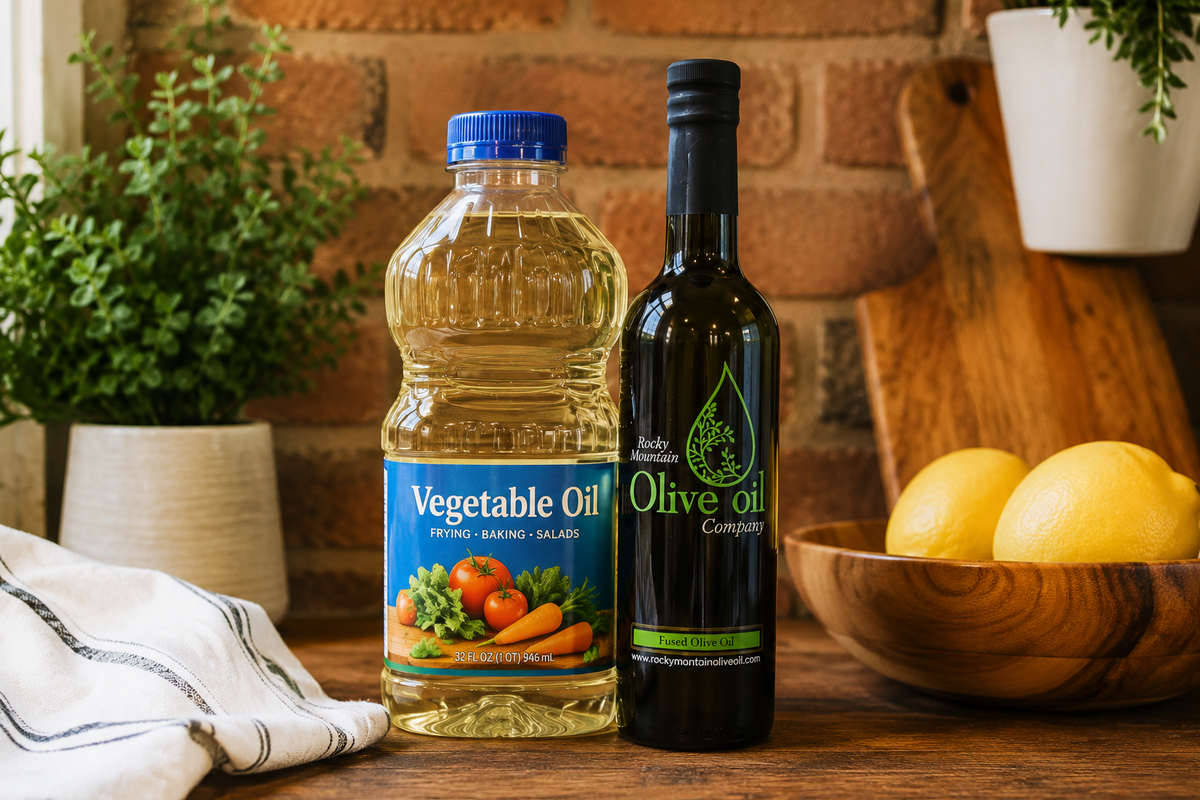
Picture this: You're standing in your kitchen, apron on, whisk in hand, feeling like a culinary genius. You flip over the recipe and it calls for vegetable oil. But your pantry is playing a cruel game — there isn't a single drop to be found.
However, there it is. Way in the back, hidden behind a family of expired hot sauces, sits a majestic bottle of olive oil. You squint at it like it's a foreign artifact. Can you actually swap olive oil for vegetable oil and survive?
The Short Answer Is: Absolutely, Yes.
The long answer? Well, buckle up because it depends on what you're cooking. But in most cases, olive oil steps in like a handsome understudy who doesn't just do the job — they steal the show.
Must Read
Both olive oil and vegetable oil are fats, and in baking, fat is fat. Your cake doesn't check the oil's résumé before it rises. Whether it's canola, sunflower, or olive, the batter treats them all equally.
But Wait — Not All Olive Oils Are Created Equal.
Here's where things get spicy, both literally and figuratively. You've got extra virgin olive oil, which has a rich, fruity, peppery personality — think of it as the olive oil equivalent of someone wearing a beret at brunch.
Then you have light or refined olive oil, which basically stripped its personality for a quieter, more neutral flavor. This one is your go-to for almost any substitution because it won't overpower your food with Mediterranean vibes.
If you dump extra virgin olive oil into a chocolate cake, don't be surprised when it tastes like the cake got lost in Tuscany. Was it a disaster? Not necessarily. But your grandma might give you a look.
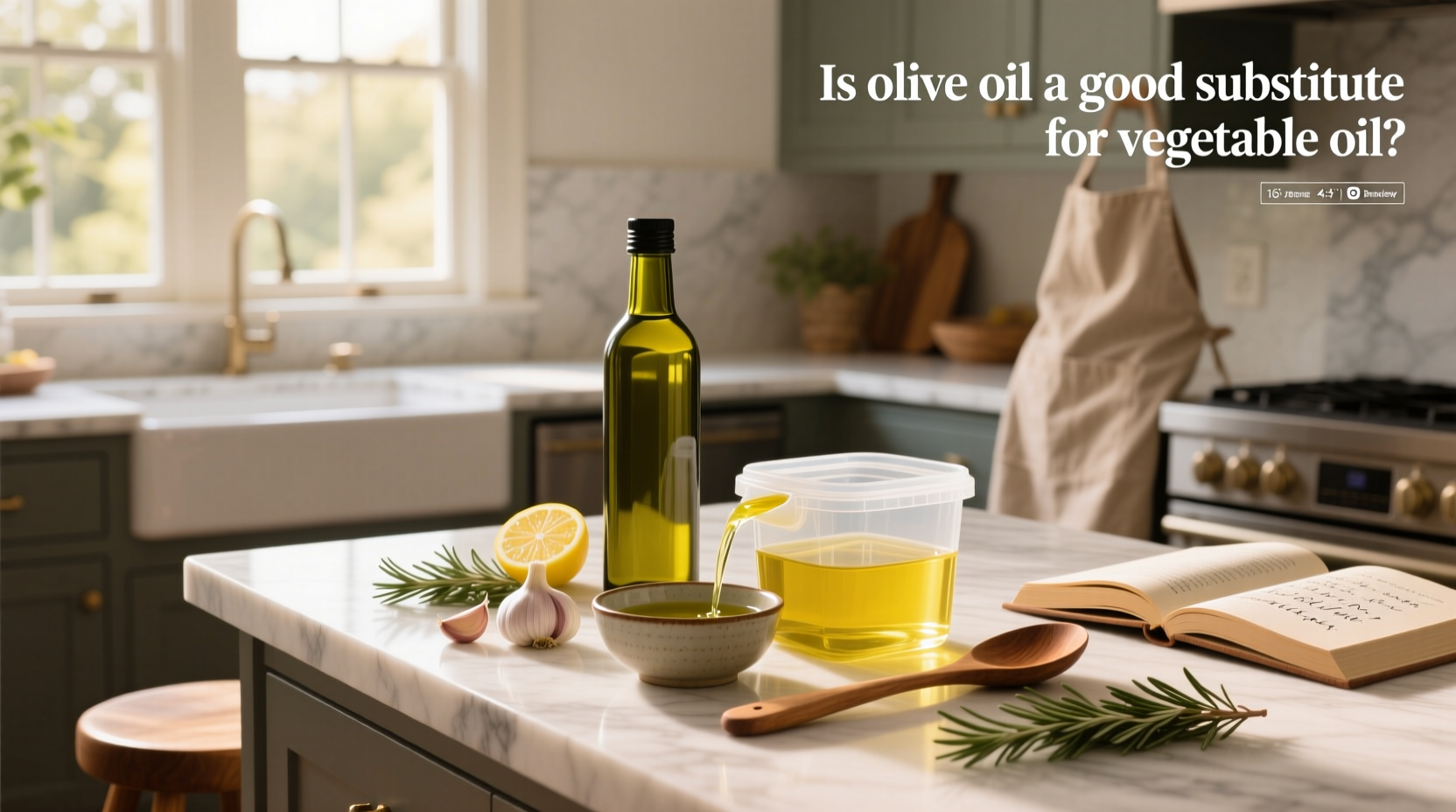 Is Vegetable Oil a Good Substitute for Olive Oil? Guide
Baking: Olive Oil Will Do the Trick
Cakes, muffins, brownies, and quick breads don't care about oil origins — they care about moisture and fat content. Olive oil actually makes baked goods incredibly moist, which is a surprising fact for people who think butter is the only moisturizer worth using.
American bakeries have been quietly swapping olive oil into recipes for years, and nobody's complaining. Olive oil even has some antioxidants — because apparently, even your brownie needs to feel healthy.
Frying: Here's Where It Gets Tricky
Olive oil has a smoke point, which is the temperature at which oil starts to break down, smoke, and basically betray your trust. Standard olive oil smokes around 375°F, while some vegetable oils handle the heat like they were born for it.
Deep frying at 400°F? Your olive oil might start throwing a tantrum. So for deep frying, stick with vegetable oil or reach for an extra sturdy olive oil blend designed for the job.
 Vegetable Oil Substitute
Light sautéing and pan-frying? Olive oil handles that with zero drama. It's practically its everyday gym workout.
Flavor Is the Plot Twist
Here's the thing nobody tells you: olive oil has flavor. Vegetable oil, on the other hand, is the silent partner who contributes to the group project but never speaks up.
So if you're making a delicate vanilla pudding, could olive oil mess with the taste? Slightly, yes. Does it matter? Only if you're the kind of person who sends food back before tasting it.
For savory dishes — salad dressings, marinades, sautéed veggies — olive oil doesn't just replace vegetable oil. It upgrades the entire situation to a five-star experience.
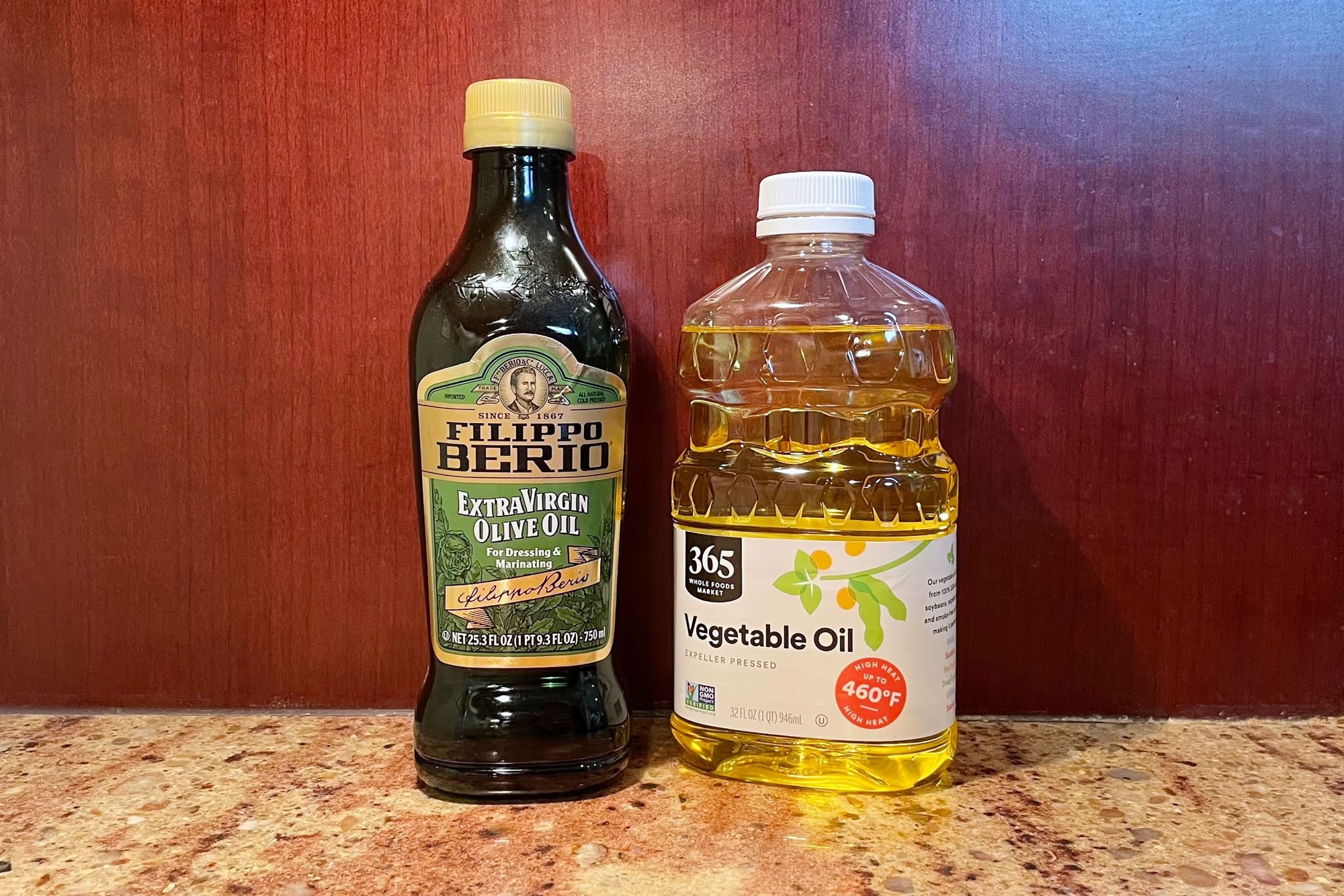 Vegetable Oil Substitute
The Health Angle Nobody Asked For
Olive oil contains monounsaturated fats, which doctors keep telling us are the good kind. A fun fact: the Mediterranean diet, which features olive oil heavily, is linked to fewer heart attacks than diets built around, say, gas station hot dogs.
Swapping olive oil for vegetable oil might actually make your food healthier. So you can substitute it guilt-free, then post on social media about your "wellness journey."
The Final Verdict
Can you substitute olive oil for vegetable oil? In almost every everyday scenario — yes, you absolutely can. The real question is whether you own the right bottle of olive oil for the right occasion.
Keep a bottle of light olive oil for baking, a fancy extra virgin for finishing and low-heat cooking, and a safflower oil for when you need high-heat frying power. That way, your kitchen never catches you without an oil, and your recipes never have to suffer from your last-minute pantry panic again.
Now go forth, swap your oils confidently, and remember — baking is science, cooking is an art, and improvising is survival. Olive oil is just here to save the day.
