Can I Leave My Cooked Chicken Out Overnight

Welcome, fellow food lovers and late-night snackers! If you’ve ever stood bleary-eyed in your kitchen at 2 a.m., staring at a glorious leftover roast chicken and wondering, “C...

Welcome, fellow food lovers and late-night snackers! If you’ve ever stood bleary-eyed in your kitchen at 2 a.m., staring at a glorious leftover roast chicken and wondering, “Can I just leave this out and deal with it in the morning?”—you are not alone. This question is a classic kitchen conundrum, one that pits our desire for convenience against the invisible world of bacteria. But don’t worry; this article isn’t a scary lecture. Think of it as your friendly guide to understanding the science of food safety, so you can make smart, confident choices. The purpose here is simple: to save you from a potential bout of food poisoning, while also helping you waste less food and save money. The advantage? You’ll never have to second-guess that chicken again, and you’ll be the person everyone trusts at the potluck.
Let’s get the big, honest answer out of the way first. No, you absolutely cannot leave your cooked chicken out overnight. I know, I know—it’s a buzzkill. But here’s why: cooked chicken is a paradise for bacteria like Staphylococcus aureus, Clostridium perfringens, and Salmonella. These microscopic party crashers love warm, moist, protein-rich environments. Picture this: you pull the chicken from the oven at 7 p.m. It’s piping hot, safe, and delicious. By 8 p.m., it has cooled to room temperature. That’s when the bacteria start their slow dance. By 4 a.m., after nine hours on the counter, that chicken has become a bacterial theme park. Even if it looks fine and smells fine, the toxins produced by these bacteria are heat-stable—meaning you can reheat it to a sizzle, and the toxins will still make you sick. The golden rule from the USDA is: never leave cooked food out for more than two hours (or one hour if the room is above 90°F, like at a summer barbecue).
Now, let’s imagine you’ve ignored that warning and left the chicken out. What actually happens? Think of it like this: your cooked chicken is a scene from a science fiction movie. At room temperature (between 40°F and 140°F, the so-called “Danger Zone”), bacteria can double in number every 20 minutes. So after just one hour, a single bacterium becomes 8. After two hours, it becomes 64. After seven hours overnight—well, you can do the math. It’s a colony of millions, all happily multiplying. A fun, creative way to visualize this: imagine you left a bucket of delicious chicken soup on your counter, and you wake up to find a tiny, invisible jungle gym of germs has been built inside it overnight. You wouldn’t sip that soup, right? The same logic applies to the chicken. The only exception is if your kitchen is a fridge—which it isn’t. So, resist the urge to “see how it looks in the morning.” Your nose and eyes are not microscopes.
Must Read
But let’s be real—maybe you’re reading this because you’ve accidentally left chicken out and are hoping for a loophole. I feel your pain. I’ve been there, that moment of guilt when you realize the chicken has been lounging on the counter since dinner. Here’s the practical, no-nonsense tip: When in doubt, throw it out. Yes, it hurts to waste food. But a trip to the emergency room with severe food poisoning—complete with vomiting, diarrhea, and dehydration—is far more expensive and unpleasant than losing one meal’s leftovers. If you want to be a gambler, know this: some people get lucky, but you’re playing Russian roulette with your digestive system. A creative hack that works: set a timer when you finish eating. When your phone buzzes, that’s the two-hour mark. Quickly pop the chicken into the fridge or freezer. This transforms “overnight worry” into a quick, 30-second habit. The real advantage? Peace of mind, and a stomach that thanks you.
What if you’re planning a dinner party or meal prep and want to avoid this dilemma entirely? Great question! Here’s the smart, chef-approved strategy: after cooking, cool the chicken quickly before refrigerating. Don’t leave a whole bird on the counter to cool slowly. Instead, slice it, shred it, or cut it into smaller pieces and spread them on a plate. This lets the heat escape faster, pulling the chicken out of the Danger Zone in minutes. Another pro move: use shallow containers to store it, rather than one big deep bowl. The more surface area, the faster the cool-down. And here’s a fun tip: if you’re serving chicken at a party, keep it hot in a slow cooker (above 140°F) or serve it on a heated platter. For leftovers, immediately divide them into small portions and refrigerate. This way, you can safely enjoy your chicken for up to four days—no midnight anxiety required.
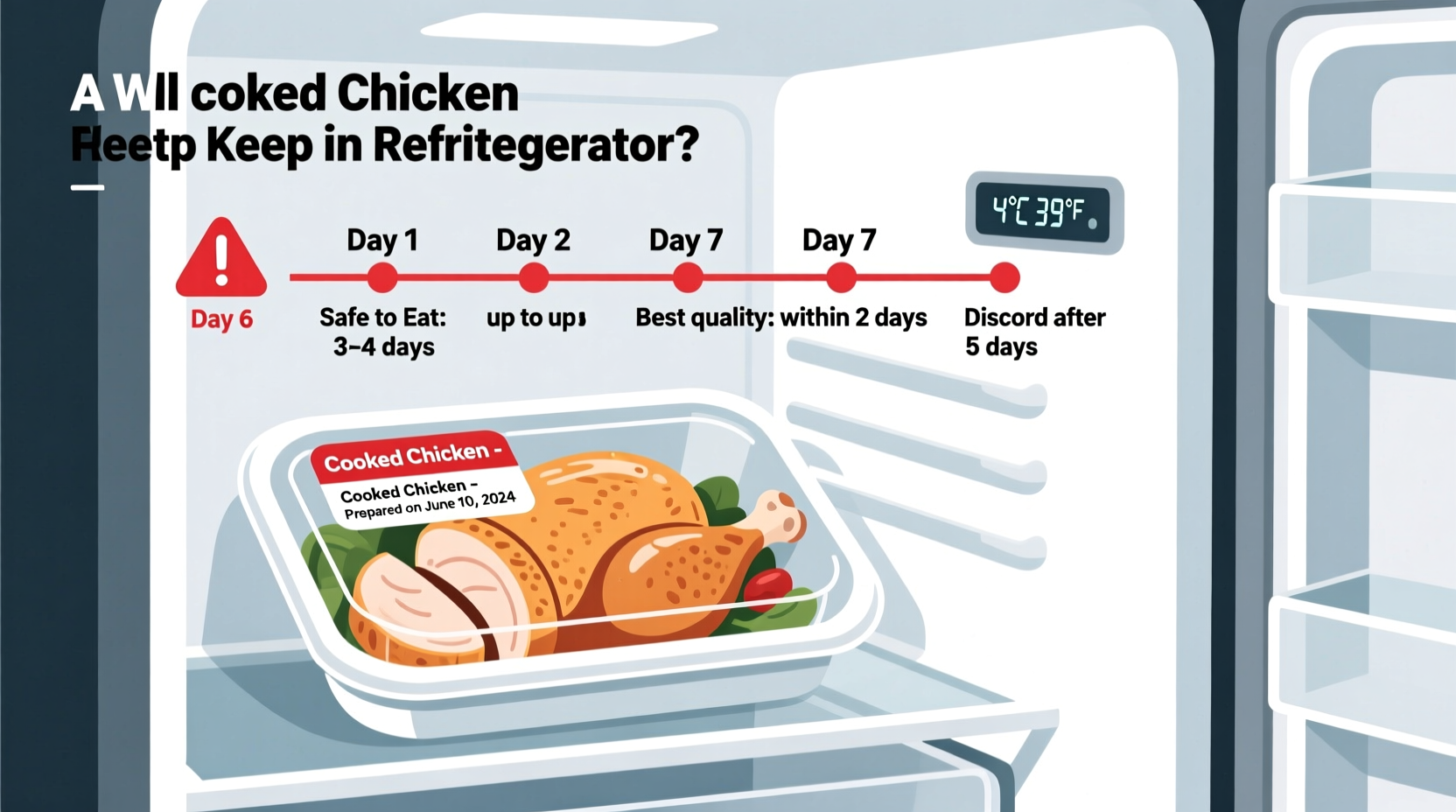 Cooked Chicken Fridge Life: Safe Storage Duration (USDA)
Let’s talk about an unexpected perk: you can actually salvage the story of the chicken you had to toss. If you accidentally left it out overnight, don’t mourn—learn and laugh. Think of it as a rite of passage in the kitchen. Share the tale with friends: “Remember that time I almost ate the chicken that had been out since Tuesday?” It’s a bonding moment. And for your future self, here’s a clever memory trick: imagine a tiny, angry bacterium wearing a party hat, waving from your counter. Every time you see cooked chicken cooling, picture that little germ. It will make you smile—and it will remind you to get that food into the fridge within two hours. The practical takeaway is that food safety doesn’t have to be a dreaded chore. It’s just a simple habit, like locking your front door or brushing your teeth. Your body will thank you, your wallet will suffer less from waste, and you’ll avoid a truly terrible morning after a long night of regret.
In the end, the answer is final: Do not leave cooked chicken out overnight. But the good news is, you now have the knowledge to prevent the problem before it starts. Use a timer, cool it fast, and store it shallow. And if you ever feel tempted to test the limits, just recall the image of that invisible bacterial festival. Your kitchen is for cooking, not for germ raves. So next time you’re staring down a leftover bird, do the safe thing and wrap it up for the fridge. You’ll wake up to a ready-to-eat, delicious meal—and a happy, healthy stomach. That’s a win you can taste.

