Calories In Fried Rice Vs White Rice

Let’s be real for a second: you love fried rice. That glossy, savory, slightly-greasy-from-the-wok goodness is basically comfort in a bowl. But then the health-conscious voice...
Let’s be real for a second: you love fried rice. That glossy, savory, slightly-greasy-from-the-wok goodness is basically comfort in a bowl. But then the health-conscious voice in your head whispers, “But what about the calories?” It’s time for a fun, no-judgment showdown between our crispy friend and its simpler cousin, plain white rice.
The White Rice Baseline
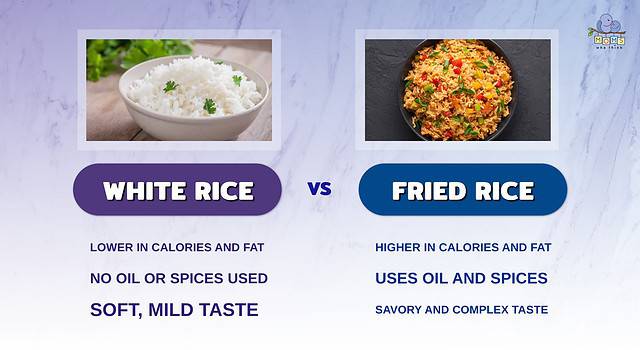
First, meet the humble control subject: a cup of steamed white rice. It clocks in at roughly 200 calories, give or take a few depending on the grain. It’s like a blank canvas—neutral, reliable, a little boring (sorry, rice).
White rice is basically just carbs with a tiny protein cameo. It’s the plain yogurt of the starch world. No drama, no surprises, just fuel.
Must Read
Enter the Fried Rice Paradox
Now, the star of the show: fried rice. A typical restaurant serving (one cup) weighs in at about 300 to 400 calories. Whoa, nearly double! But hold the panic—it’s not a villain, it’s a culinary superhero.
Those extra calories come from oil, eggs, soy sauce, and sometimes bits of pork or shrimp. Here’s the kicker: you’re also getting way more flavor and satiety. How often do you eat a whole cup of plain white rice and feel thrilled? Exactly.
The calorie difference isn’t just a number; it’s a trade-off for taste and a happier lunch break. And guess what? That trade-off can make your diet way more sustainable.
The Secret Ninja Trick: Volume and Veggies
Here’s where it gets fun. Most fried rice recipes are shockingly flexible. You can take that same 400-calorie dish and pump it full of peas, carrots, bell peppers, and scallions.
Suddenly, you have a plate that’s more food—more volume, more fiber, more color—for about the same number of calories. Bam! You’ve tricked your brain into feeling like a feast.
The secret isn’t to fear the oil; it’s to dilute the rice with awesome, crunchy stuff. You get the fried goodness with a side of “I’m a health genius.”
Why This Battle Makes Life More Fun
Think about it: a big bowl of plain white rice is like listening to a song with only one note. Fried rice is the full symphony—with drums, guitar, and maybe a surprise sax solo (that’s the garlic, obviously).
 White Rice vs. Fried Rice: What Are the Differences?
By knowing the calorie difference (roughly 100 to 200 extra per cup), you stop treating food as an enemy. You start playing a game: “How can I make my fried rice work for me today?”
Maybe you use a little less oil at home. Maybe you celebrate that restaurant fried rice because you know it’s a joyful indulgence. That’s freedom, my friend.
The Big, Happy Perspective
Here’s the truth that no scary diet article will tell you: a 100- to 200-calorie difference is nothing in the big picture of a week. That’s like one extra banana and a stick of gum.
If you choose fried rice over white rice and feel satisfied, you’re less likely to raid the snack drawer an hour later. Calories aren’t just numbers; they’re fuel for happiness.
Your body doesn’t keep a perfect ledger. It responds to patterns, not single meals. So eat the fried rice. Laugh at the gulf between 200 and 400 calories. It’s a small, hilarious difference that makes life taste better.
Go Forth and Rice Wisely
So next time you’re staring at a menu, don’t freeze up. You’ve got the intel: plain white rice is the boring baseline, and fried rice is the party upgrade. Choose your adventure with zero guilt.
The real victory? Realizing that learning a tiny bit about food makes you a more joyful eater. You’re not counting numbers—you’re designing delicious experiences.
So grab that wok, toss in some leftover rice, an egg, and a fistful of frozen peas. You’re not “sacrificing” anything. You’re cooking up a life that’s a little crispier, a little more golden, and a whole lot more fun. Go get ’em, chef.
