Baking Chocolate Substitute For Cocoa Powder

Welcome to the sweet side of baking, where a missing tin of cocoa powder no longer spells disaster. Whether you’re in a rush, out of stock, or simply looking to try something...

Welcome to the sweet side of baking, where a missing tin of cocoa powder no longer spells disaster. Whether you’re in a rush, out of stock, or simply looking to try something new, the world of chocolate substitutes offers a delightful playground for any cookie, cake, or brownie enthusiast. In this article we’ll explore why swapping cocoa powder can be fun, how it can improve flavor and texture, and the easy tricks you can use to keep your desserts turning out perfectly every time. We’ll compare taste, nutrition, and give clear ratios so you never guess again. So grab your bowl and reimagine chocolate desserts with a fresh twist.
The primary purpose of a chocolate substitute is to keep the deep flavor of chocolate when the original ingredient isn’t available or when you want a lighter option. One major advantage is flexibility: you can adjust sweetness, fat content, or allergy needs by choosing a different base, such as melted dark chocolate, chocolate syrup, or a plant‑based milk chocolate. Substitutes bring a smoother texture because they melt more uniformly than powdered cocoa, which can be gritty. This translates into creamier batter and a more indulgent mouthfeel, making your baked good feel luxurious without extra effort. Because the substitute already contains sugar and fat, you cut back on other sweeteners or butter, simplifying the recipe and helping with portion control.
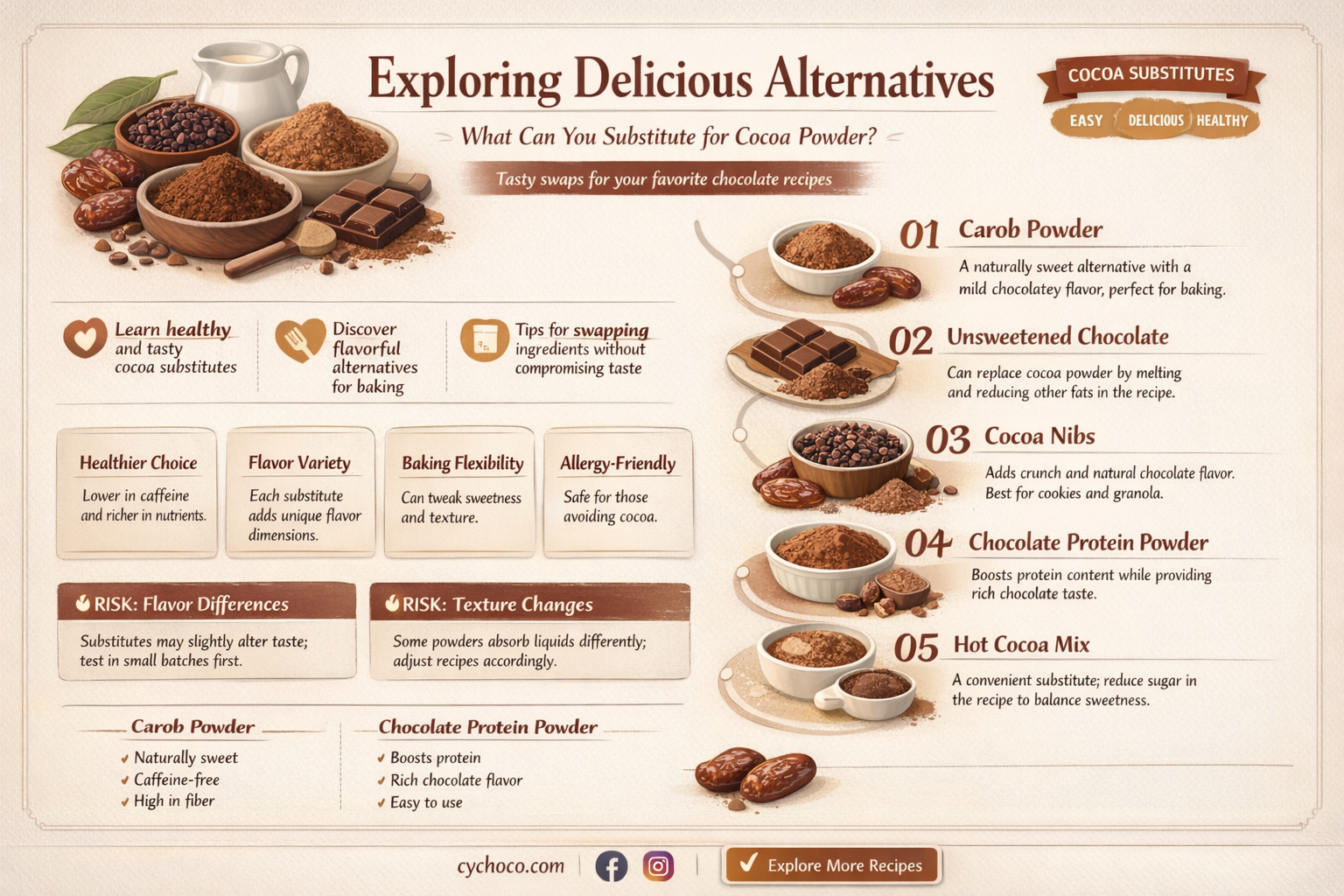
One of the popular swaps is melted chocolate, which delivers both cocoa solids and buttery richness in one step. For a quick fix, replace each tablespoon of cocoa powder with about one tablespoon of melted chocolate, adjusting liquid slightly to maintain consistency. Another fun option is chocolate chips; chopped finely they can be stirred into batter, giving pockets of chocolate goo. If you’re aiming for a dairy‑free treat, consider carob powder, which has a naturally sweet, mellow taste and no caffeine, or a blend of nut butter and maple syrup for a fudgy base. You can also use store‑bought chocolate sauce, which adds a glossy sheen and an extra flavor without needing to melt anything.
Must Read
Think beyond the cupboard by introducing chocolate spread, like Nutella or a homemade nut‑chocolate blend, directly into your batter. Two tablespoons of spread can replace a quarter cup of cocoa while adding a lovely nutty hint that pairs well with banana bread or muffins. For a lighter brownie, melt couverture chocolate and fold it into the mix; the high cocoa butter content gives a silky finish. Another clever trick is to use cocoa butter as a substitute—melt it first, then whisk it with a little sugar, creating a smooth chocolate‑flavored liquid that blends seamlessly into any recipe. These alternatives not only change the flavor profile but also let you experiment with texture, making each batch uniquely yours.
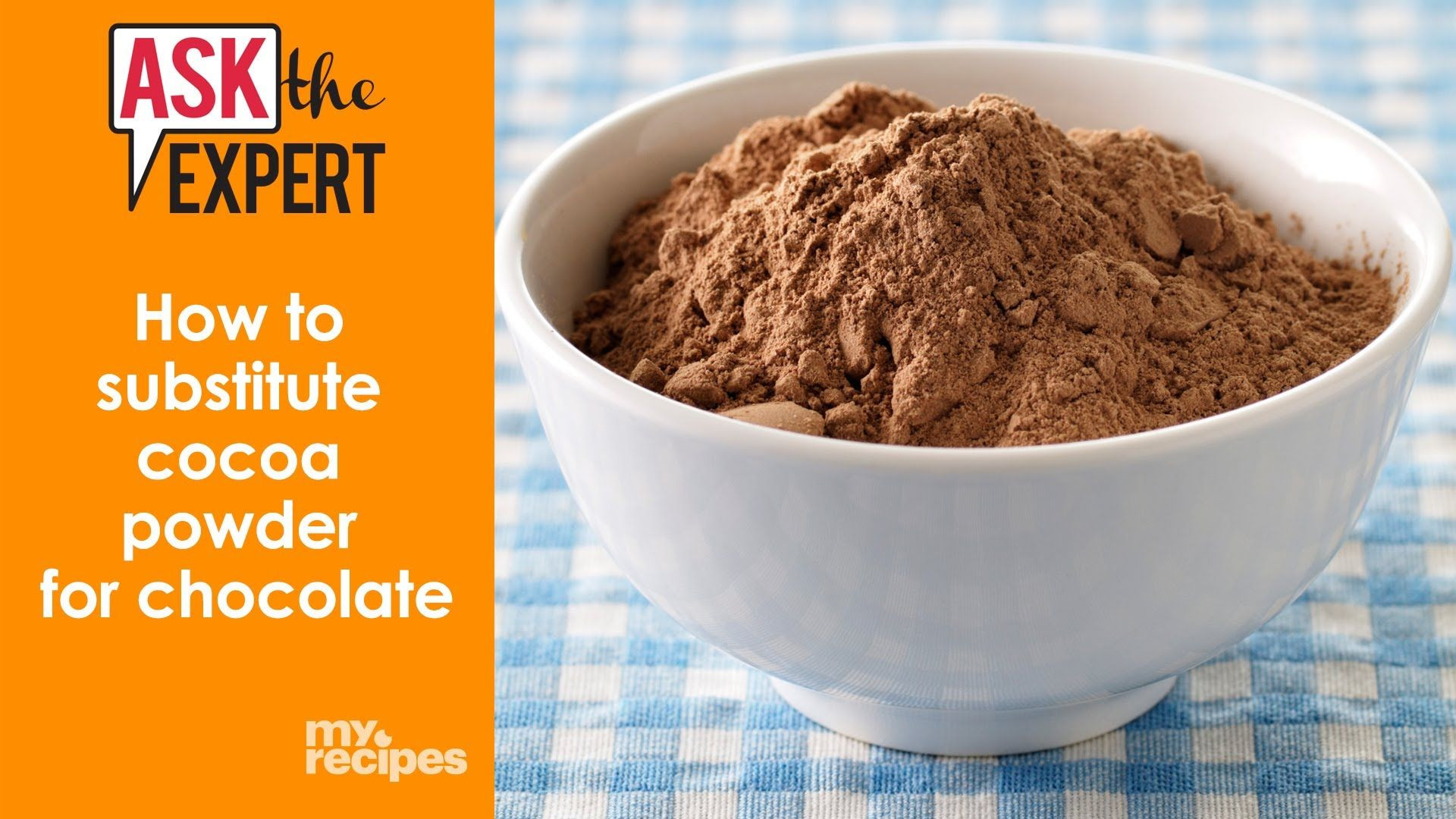 List Of Best Substitute Cocoa Powder for Baking Chocolate Ever – Easy
When you decide to swap cocoa powder, start with a simple ratio: one tablespoon cocoa = one tablespoon melted chocolate or two tablespoons chocolate chips. Keep an eye on liquid levels—melted chocolate adds fat, so you may need a splash more milk or water to keep batter from becoming too thick. If the substitute is sweeter than cocoa, reduce added sugar by about a teaspoon per cup of mini‑batches. Always test a small batch first, note the flavor and rise, then adjust wet ingredients and sweeteners accordingly. Remember that cocoa powder is also a leavening agent in some recipes, so if you rely on it for lift, add a pinch of baking soda to compensate. and enjoy learning each time too.
With these ideas and a few quick measurements, you’ll never panic when the cocoa tin is empty. The joy of baking lies in improvisation, and each substitute you try adds a layer of personality to your creations. So go ahead—melt some chocolate, stir in a spoonful of spread, or whisk up carob, and watch your desserts transform from ordinary to extraordinary. Your friends and family will love the surprises, and you’ll master the art of flexible, chocolate‑rich baking. Keep experimenting with other pantry staples—think melted white chocolate for a vanilla twist, or a dash of instant espresso to deepen the cocoa flavor. Document each successful swap in a notebook so you have a reference next time you bake.