At What Temperature Does The Water Freeze

There is a simple, almost magical satisfaction in watching a tray of water transform into solid, crystalline ice. Whether it’s the clinking of cubes in a summer drink, the ser...

There is a simple, almost magical satisfaction in watching a tray of water transform into solid, crystalline ice. Whether it’s the clinking of cubes in a summer drink, the serene glide of an ice skater, or the quiet beauty of a frozen pond at dawn, the freezing of water is a phenomenon that touches nearly every part of our lives. Understanding exactly when this transformation happens isn't just a fact from a science textbook—it’s a piece of practical wisdom that saves time, prevents kitchen frustration, and even keeps us safe during winter storms.
The textbook answer is a familiar one: water freezes at 32 degrees Fahrenheit (0 degrees Celsius). This is the precise temperature at which liquid water’s molecules slow down enough to lock into a hexagonal lattice, forming ice. This principle is the backbone of countless everyday activities. For example, when a weather forecast warns of a freeze, farmers know to harvest crops or cover delicate plants. On a smaller scale, you rely on this number every time you set your freezer to below 32°F, expecting those ice cube trays to be ready by morning. Without this predictable threshold, our modern food preservation, from frozen vegetables to packaged meals, would be chaotic.
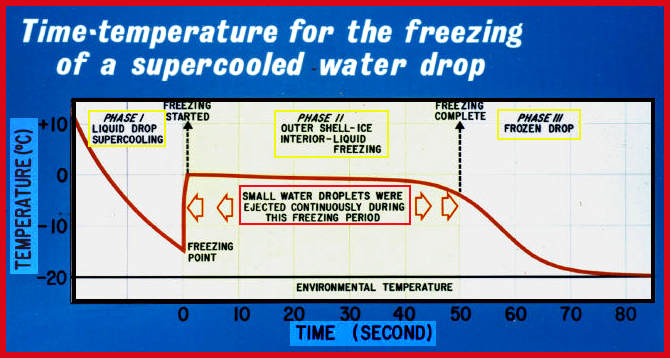
However, the story is richer than a single number. One of the most valuable benefits of knowing this temperature is understanding that water doesn’t always freeze instantly at 32°F. Because of a phenomenon called supercooling, pure water can sometimes remain liquid at temperatures as low as -40°F if it lacks a nucleation point—a tiny impurity or scratch for crystals to form on. This is why a bottle of purified water left in the car on a freezing night might suddenly turn to slush when you tap the cap. For everyday life, this explains why you should avoid placing hot glassware directly into a freezer: the sudden temperature shock can create nucleation sites, causing the container to shatter before the water even freezes.
Must Read
The presence of impurities, like salt or sugar, fundamentally alters the freezing point. This is a principle you directly benefit from when your city’s road crews spread salt on icy highways. Salt dissolves into the water’s surface, lowering its freezing point to around 15°F or lower, depending on concentration. This is why a sidewalk that would normally be a skating rink at 28°F remains a wet, walkable surface after treatment. In your own kitchen, when making homemade ice cream, adding rock salt to the ice bath allows the surrounding mixture to get colder than 32°F, drawing heat out of the cream and freezing it into a smooth, scoopable dessert.
Pressure also plays a quiet, dramatic role. While you don't often feel it, water under extreme pressure can remain liquid far below 32°F. This is why glaciers can slide over bedrock: the immense weight at the bottom of the ice sheet creates pressure that lowers the freezing point, creating a thin layer of meltwater that acts as a lubricant. For a more relatable example, a teenager’s ice skates work on a similar principle. The sharp blade’s concentrated pressure on the ice momentarily lowers its melting point, creating a tiny film of water that allows the skate to glide with effortless grace. Without this pressure-induced melting, ice skating as we know it would be far less smooth.
 Water Freezing
To explore the freezing point of water on your own, try a simple experiment at home. Take three identical cups of tap water and place them in your freezer. In one cup, add a teaspoon of table salt; in another, a teaspoon of sugar; and leave the third cup pure. Check them every 30 minutes. You will observe that the pure water freezes first at 32°F, while the salty water may remain slushy for hours because its freezing point has dropped significantly. For a second tip, try the “instant ice” trick: freeze a bottle of purified water for about 2.5 hours (without disturbing it), then carefully pour it over an ice cube. The stream will instantly crystallize into a tower of ice, demonstrating supercooling in action. Remember, use only purified water for this—tap water’s minerals spoil the effect.
Finally, remember that the freezing point of water is not just a scientific curiosity—it is a daily ally. When you know that water expands by about 9% as it freezes, you understand why you must leave headroom in a glass container or why a frozen pipe bursts. This knowledge helps you protect your home by insulating pipes before a deep freeze. It also deepens your appreciation for winter’s beauty: the intricate patterns on a frosted window are a direct result of water vapor skipping the liquid phase and desublimating into ice crystals at the surface. So the next time you drop an ice cube into a glass, take a moment to appreciate the elegant physics at 32°F—a temperature that shapes our winters, our food, and our world.

