Are There Any Penguins In The North Pole?

There is a charming, almost universal cocktail party question that sparks delightful confusion and fascinating science: are there any penguins at the North Pole? The simple an...
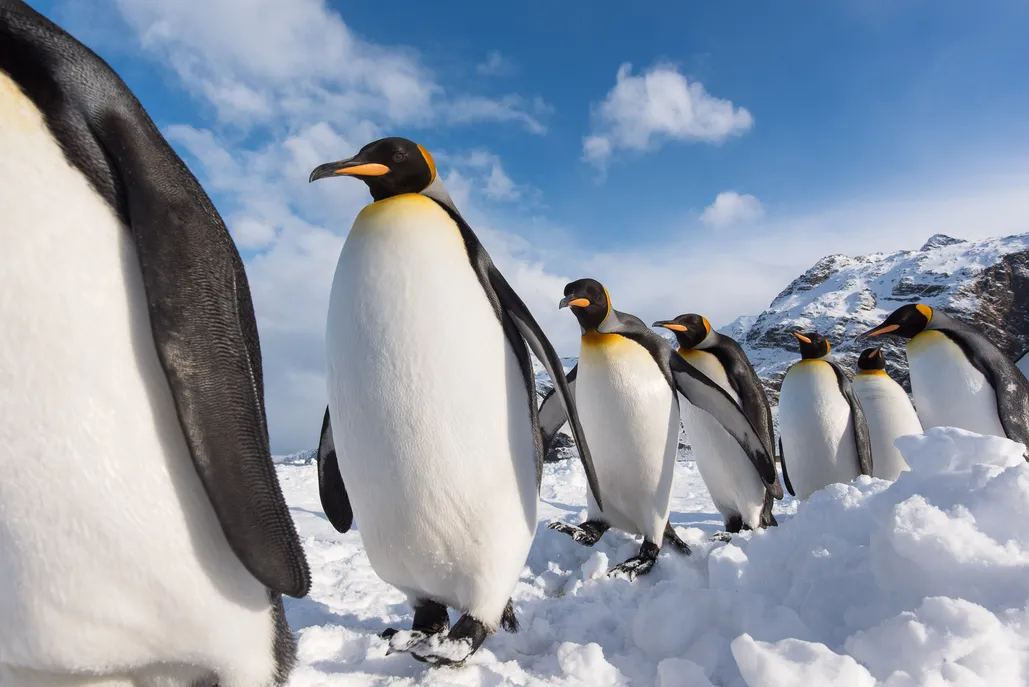
There is a charming, almost universal cocktail party question that sparks delightful confusion and fascinating science: are there any penguins at the North Pole? The simple answer is a definitive no, and understanding why unlocks a deeper appreciation for how life adapts to our planet’s most extreme environments. This isn’t just a trivia fact; it’s a gateway to understanding biogeography—the study of where animals live and why. For the curious mind, unraveling this mystery turns a casual wonder into a valuable lesson in ecology, evolution, and the sheer power of natural barriers. It helps us see the world not as a simple globe, but as a mosaic of distinct, interconnected systems.
The core purpose of this question is to highlight a fundamental rule of nature: penguins are exclusively a Southern Hemisphere phenomenon. While polar bears and Arctic foxes thrive in the snow and ice of the North, penguins evolved in the cool currents and nutrient-rich waters of the Antarctic, South America, Africa, Australia, and the Galápagos Islands. The key benefit of knowing this for everyday life is that it equips you with a powerful mental model: animals are not randomly scattered. Their distribution is dictated by millions of years of evolutionary history, continental drift, and ocean currents. Next time you see a nature documentary, you’ll watch with a more discerning eye, recognizing that a penguin waddling on ice almost certainly lives near the South Pole, not the North.
Consider a concrete scenario: a child, after watching a movie featuring both polar bears and penguins living together on the same iceberg, asks if that is real. Without this knowledge, an adult might guess it’s plausible. But armed with the correct answer, you can turn this into a wonderful teachable moment. You can explain that while both animals are adapted to cold, they were separated by the hot, tropical equator—an impassable barrier for penguins that cannot tolerate warm water for long periods. This example shows how a simple fact—no penguins at the North Pole—actually explains a major global pattern of life, making geography and biology feel tangible and exciting rather than abstract.
Must Read
To add further context, imagine a conservationist trying to “save” penguins by relocating some to the Arctic. This would be a biological disaster. Penguins in the North Pole would face fierce competition from existing seabirds like puffins and guillemots, and more critically, they would be utterly unprepared for a host of land predators—Arctic foxes, wolves, and especially polar bears—which never existed in their ancestral homes in Antarctica. The flightless penguin, which evolved on predator-free shores, would be easy prey. This highlights a profound benefit of understanding ecology: it prevents well-meaning but harmful interventions and reinforces the importance of leaving nature’s delicate balances intact.
Another layer of understanding comes from the rare, ironic exception: a few individual penguins have, very rarely, turned up in the Northern Hemisphere, typically as castaways carried by fishing boats or swept far north by abnormal currents. For instance, a single Humboldt penguin was once spotted off the coast of Alaska. However, these are accidental vagrants, not a sign of a population. They survive only temporarily and fail to breed. This exception actually proves the rule: the vast, warm equatorial waters and the sheer distance from any native colony make the Northern Hemisphere a permanent, unreachable destination for penguin life, reinforcing how deeply adapted they are to their southern homes.
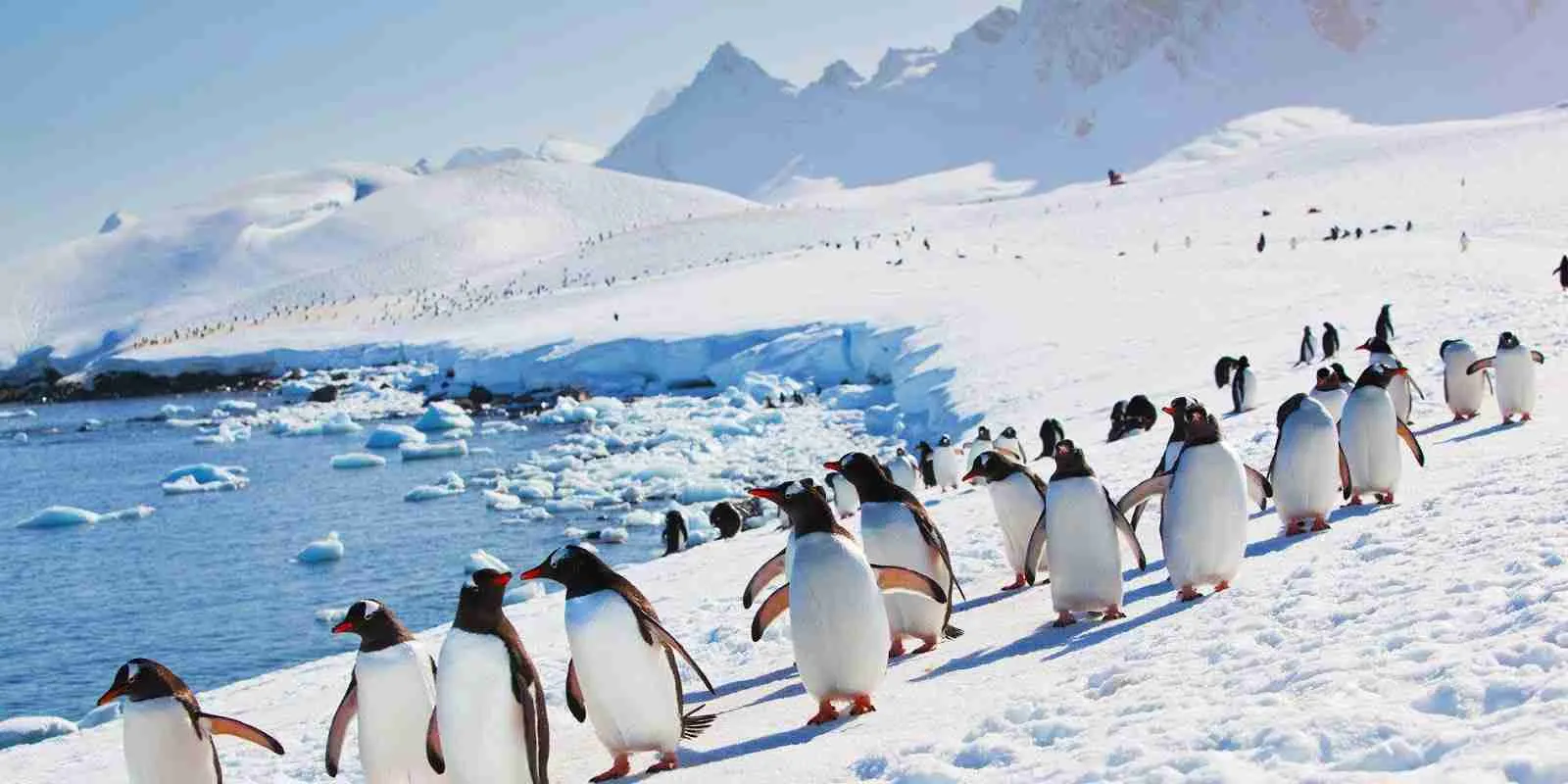 Why Are There No Penguins In The North Pole | Detroit Chinatown
For readers eager to explore this topic on their own, here are three simple tips. First, use a reliable atlas or an online ocean current map to trace the cold currents that flow around Antarctica. You will see how they create a cool-water highway that penguins follow, but that stops abruptly at the tropics. Second, watch a documentary comparing Arctic and Antarctic wildlife, such as the BBC’s “Frozen Planet.” Pay close attention to the list of animals: the Arctic features seals, whales, and polar bears, while the Antarctic features seals, whales, and penguins—but never the other way around. Finally, visit a zoo or aquarium with a penguin exhibit and ask a zookeeper to point out a temperature control chart or a map of the penguins’ natural range. You will see that almost all species are shown in the southern half of the globe, a silent but powerful testament to their unique place in Earth’s story.
In conclusion, the question “Are there any penguins in the North Pole?” is far more than a simple yes-or-no. It is a perfect, compact lesson in how our planet’s history and physical forces shape the distribution of life. Understanding this sharpens our observation of the natural world, prevents us from mixing up iconic animals, and deepens our respect for the unique evolutionary paths each species has taken. The next time someone asks this question, you won’t just give the answer; you’ll spark a conversation about the beautiful, logical, and surprising rules that govern life on Earth. And that is a benefit that enriches every nature walk, every documentary, and every moment of everyday wonder.

