A Little Girl Is Losing Faith In Democracy

Little Emma's Democracy Dilemma So, there's this sweet little girl, Emma. She's about eight, with pigtails that swing when she talks and eyes that sparkle with curiosity. She...

Little Emma's Democracy Dilemma
So, there's this sweet little girl, Emma. She's about eight, with pigtails that swing when she talks and eyes that sparkle with curiosity. She's like your neighbor's kid or the one you see at the park, full of questions and wonder. Emma loves democracy. She thinks it's like the coolest game of Simon Says ever, where everyone gets a turn to lead the playground, and everyone's voice matters.
Emma's been learning about democracy in school. She loves the part where everyone gets a vote, and the majority rules. It's like when she and her friends decide what game to play at recess. If more kids want tag, then that's what they do. She thinks it's fair, and she loves being part of the decision-making process.
But Then Came the Election
Emma's teacher decided to hold a mock election in their classroom. They were going to vote for a class representative, just like grown-ups vote for a president. Emma was thrilled. She thought it was the coolest thing ever. She campaigned hard, promising to make sure everyone got a turn to pick the movie for movie day and to make sure the class pet, Mr. Fluffers, got plenty of treats.
Must Read
But when the votes came in, Emma didn't win. She was surprised, a little disappointed, but she understood. She knew not everyone wanted the same things she did. She thought that was okay. After all, that's how democracy works, right?
But Then Came the Results
Emma watched as her teacher counted the votes. She saw the numbers, and she didn't understand. She had more votes than anyone else, but she didn't win. She looked at her teacher, confused. "But I thought democracy meant the person with the most votes wins," she said.
Her teacher smiled sadly and explained the Electoral College. Emma's little brow furrowed as she tried to understand. She didn't get it. She thought democracy meant the person with the most votes won. She thought that was the fair way to do things. She thought that was what made democracy special.
Why We Should Care
Emma's confusion is a reminder of why we should care about democracy. It's a reminder that democracy isn't just about voting; it's about understanding and trusting the process. It's about knowing that our voices matter, even if we don't always get our way.
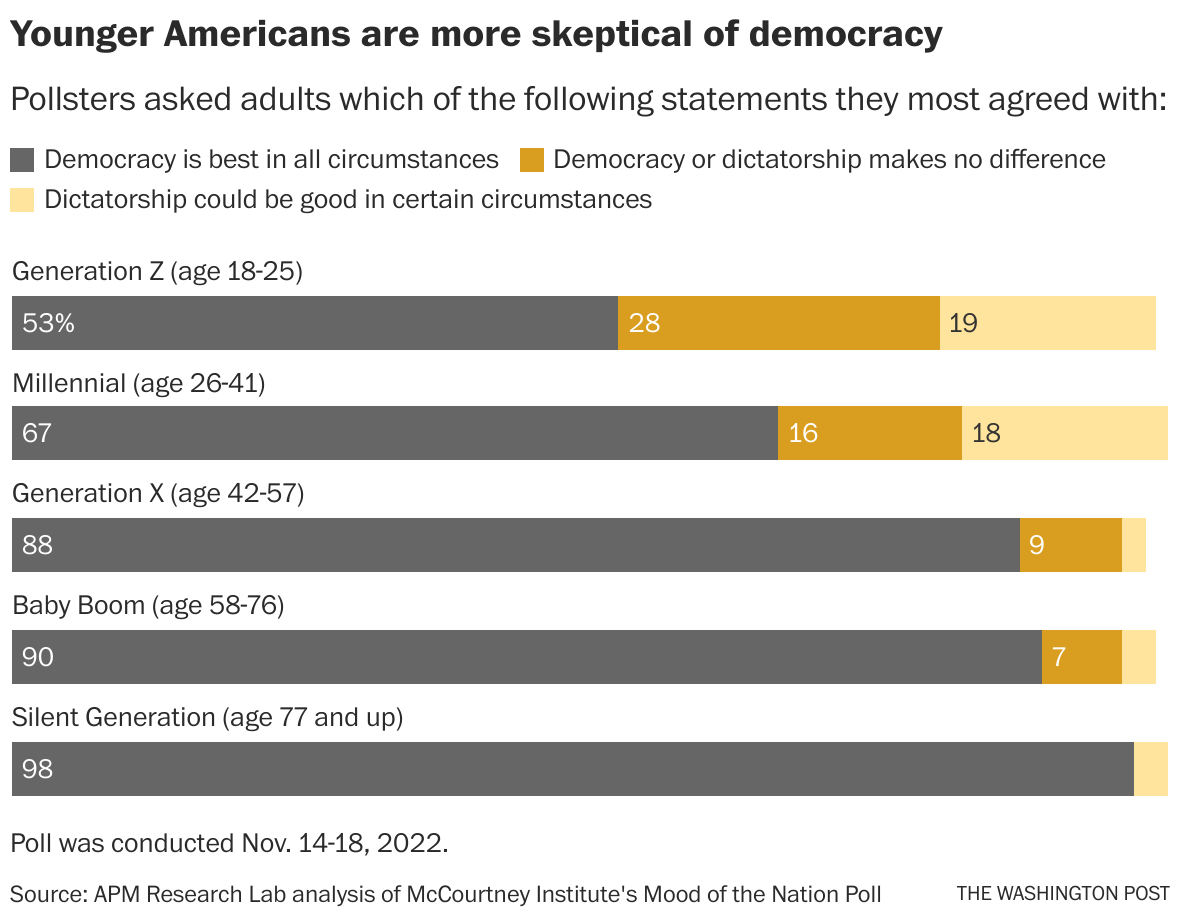 Opinion | The young are losing faith in democracy. Here’s what to do
Emma's story is a reminder that democracy is like a big, complex game of Simon Says. Sometimes, the rules might seem weird or unfair, but they're there for a reason. It's our job to understand them, to question them when we don't, and to work together to make sure everyone's voice is heard.
So, What Can We Do?
We can start by explaining democracy to the little Emmas in our lives. We can tell them about the Electoral College, about compromise, about why it's important to vote even if you don't think your voice matters. We can show them that democracy isn't just about winning; it's about working together to make things better for everyone.
We can also lead by example. We can show Emma that we care about democracy by voting, by staying informed, by being active in our communities. We can show her that democracy isn't just something we learn about in school; it's something we live every day.
So, let's not lose faith in democracy. Let's not let Emma lose faith in democracy. Let's make sure she grows up knowing that her voice matters, that her vote counts, and that together, we can make democracy work for everyone.
