A Christmas Carol Charles Dickens Characters

So, you think you know Christmas Carol. You’ve seen the Muppets, the Mr. Magoo, and that one where Scrooge is a sexy submarine captain (don’t ask). But Charles Dickens’ origin...

So, you think you know Christmas Carol. You’ve seen the Muppets, the Mr. Magoo, and that one where Scrooge is a sexy submarine captain (don’t ask). But Charles Dickens’ original 1843 novella is a glorious, Victorian train wreck of characters that are way stranger than you remember. Buckle up, because we’re diving into the dysfunctional family meeting that saved Christmas—and nearly bankrupted Dickens himself.
Ebenezer Scrooge: The Original Grinch with a Secret Sauce
Let’s start with the man, the myth, the miser: Ebenezer Scrooge. His name is literally a synonym for “cheap jerk,” but did you know his first name, Ebenezer, means “stone of help” in Hebrew? Ironic, right? The guy is a walking bank vault with a heart made of cold, hard coal.
Here’s a fun fact: Dickens based Scrooge’s coldness on his own father, who was financially reckless and once sent young Charles to work in a shoe-polish factory. Ebenezer’s famous “Bah, humbug!” wasn’t just a catchphrase—it was the 1840s equivalent of a teenager screaming “OK, Boomer” at a Christmas caroler.
Must Read
And that whole “tiny Tim” redemption? Spoiler alert: Scrooge doesn’t become a saint. He just starts paying his employees a living wage and buys a giant turkey. It’s the Victorian version of a rich guy donating to a GoFundMe after getting haunted by three ghosts. Baby steps.
Jacob Marley: The Ghost Who Invented Crowdfunding
Poor Jacob Marley. He’s dead before the story even starts, yet he’s the first ghost to show up. His entrance is pure nightmare fuel: chains made of cash boxes and keys, a jaw that drops to his chest, and a bandage holding his head on. It’s like a Victorian Halloween decoration that won’t shut up.
Marley’s backstory is hilarious in hindsight. He was Scrooge’s business partner and equally stingy, but his punishment is to wander the Earth forever. That’s right—his hell is eternal paperwork and watching people enjoy life. He’s the first ghost to say, “Change or you’ll end up like me,” which is basically a rude text from a dead friend.
Dickens actually invented the concept of a “dead business partner ghost” to warn us about capitalism. But let’s be real: Marley probably started haunting Scrooge just for the dramatic entrance. He could have sent an email.
The Ghost of Christmas Past: A Nosy Roommate with a Weird Hat
This ghost is a walking candle with a child’s body and an old man’s voice—basically a creepy doll that smells like melted wax. Its head shoots a beam of light at your memories like a creepy slideshow projector. Remember that ex-girlfriend you ghosted in 1998? This ghost will show her to you, in 4K.
The Ghost of Christmas Past uses its weird cap to hide its face, which is a metaphor for selective memory. It shows Scrooge happy childhood moments first, then hits him with the sad stuff—like his dad sending him to boarding school. It’s the emotional equivalent of “We need to talk about your car’s extended warranty.”
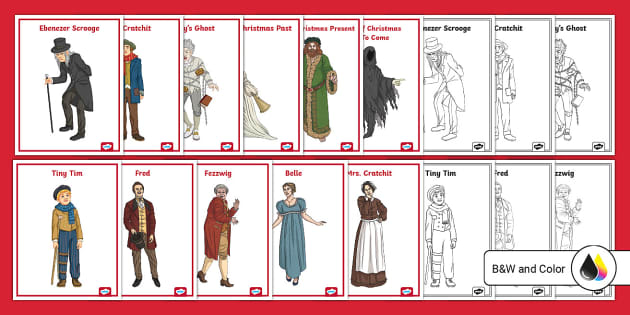 Christmas Carol Characters | Resource | Twinkl USA
Fun fact: Dickens originally wrote this ghost as a woman, but his publisher said that was “too confusing.” So we got a gender-fluid, candle-headed entity that still haunts every high school English class.
The Ghost of Christmas Present: This Guy Is Basically Santa on Cocaine
Now we’re talking! This ghost is a giant, bearded, jolly dude wearing a green robe and a holly crown. He sits on a throne of turkeys, pies, and pudding. He’s the ghost you actually want to invite to your holiday party—until you realize he dies at the end of the night.
Here’s the kicker: this ghost ages 1,000 years in a single day. He’s born on Christmas morning and dead by midnight, because Dickens was really into dramatic metaphors. He also shows Scrooge the Cratchits’ poverty, including Tiny Tim’s crutch. But he doesn’t just show you; he lectures you with a powerful line: “Mankind was my business.” Translation: “Stop being a selfish jerk or this cute kid dies.” Heavy.
And the ghost’s torch? It’s called a “cornucopia” and sprinkles invisible blessings on people. Basically, it’s a magical glitter cannon of good vibes. I want one.
The Ghost of Christmas Yet to Come: The Silent Treatment Perfected
This ghost is a hooded phantom in black robes that never speaks. It just points a bony hand at scenes of Scrooge’s death: servants stealing his curtains, business partners not caring, and a grave with his name on it. It’s the ultimate passive-aggressive roommate.
Dickens wrote this ghost as a silent enforcer because silence is scarier than words. Imagine being forced to watch your own funeral from an 1840s drone camera. The ghost’s only line is literally “silence,” which is technically not a line. It’s a mood.
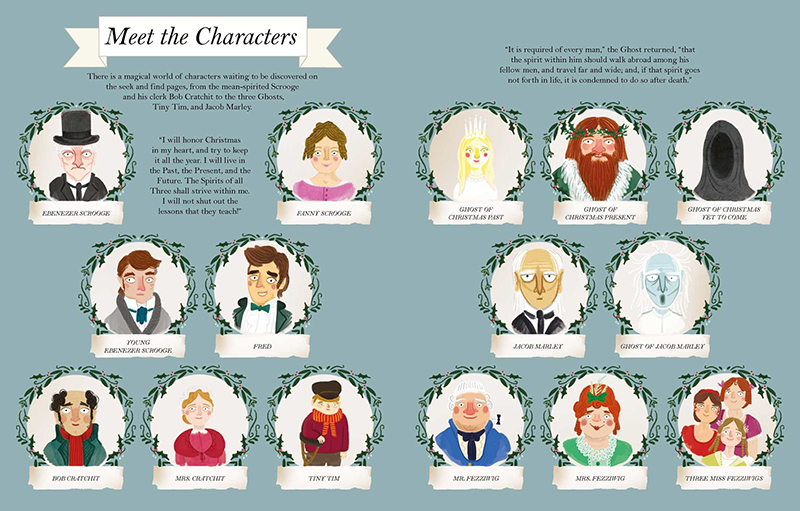 Charles Dickens A Christmas Carol Characters Some Illustrations Bob
Surprising fact: Dickens originally planned for Scrooge to die alone and unloved, but his friend William Makepeace Thackeray said, “Dude, it’s Christmas. Lighten up.” So Scrooge wakes up, buys the turkey, and becomes a second father to Tiny Tim. Happy ending achieved via peer pressure.
The Cratchits: The Poor Family That Stole Our Hearts (and Your Empathy)
Bob Cratchit is Scrooge’s underpaid clerk who works in a freezing office for 15 shillings a week. He’s so nice that he toasts Scrooge at Christmas dinner, even though his boss is a human icicle. Bob is the original “I’m not mad, I’m just disappointed” dad.
Then there’s Tiny Tim, the sickly son who walks with a crutch and says “God bless us, every one!” This kid is essentially a walking sad violin designed to make you cry. Dickens used him to highlight child labor laws, but let’s be real: Tim’s job is to make Scrooge (and you) feel guilty about buying an expensive latte.
Mrs. Cratchit? She hates Scrooge with a Passion That Burns Brighter Than the Christmas Pudding. She’s the one character who calls him out: “A merry Christmas to Mr. Scrooge! If he were dead, I’d have a better meal!” She’s the unsung hero of the story. Give her a raise.
Fred: The Nephew You Kinda Want to Punch
Fred is Scrooge’s cheerful nephew who won’t stop inviting his uncle to Christmas dinner. He’s like that friend who posts “Merry Christmas” on Facebook in July. Scrooge calls him a “fool,” but Fred just laughs and says, “You’ll come around, old grouch.”
Fred’s superpower is weaponized optimism. He throws a party where everyone is poor but happy, and he dances so hard his feet catch fire (okay, that’s not in the book, but it should be). He’s the only character who treats Scrooge like a normal human being, which is why Dickens made him the moral victor.
Final thought: The best part of A Christmas Carol isn’t the ghosts or the turkey. It’s the fact that Scrooge changes because he saw his own death. That’s the ultimate reality check—reminding us that it’s never too late to buy a bigger bird and stop being a human coin purse. God bless us, every one—especially the weirdos in the corner with the chains.
